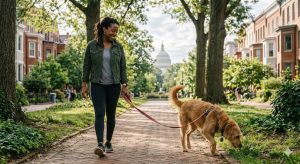
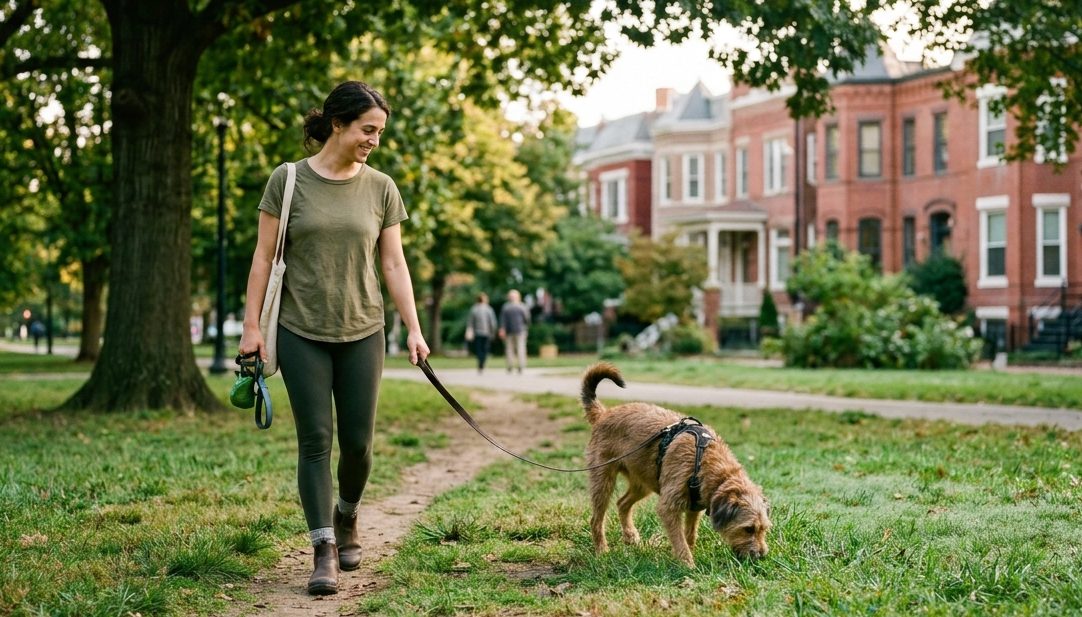
Every summer, I watch the same thing happen on Capitol Hill. It’s 2pm, the brick sidewalks are radiating heat like a stovetop, and someone’s walking their dog across East Capitol Street like it’s a normal spring afternoon. The dog is panting hard. Its paws are lifting off the ground a beat too fast. The dog parent has no idea anything is wrong yet.
That’s the part that scares me. By the time most people notice, the dog is already in trouble.
Quick Answer: When is it too hot to walk a dog in DC? Once the air hits about 85°, walks should be short and shaded. When the feels-like temperature climbs past that, the safe move isn’t a cooler hour, it’s off the pavement entirely. The walk goes indoors. And before any summer walk, press the back of your hand flat on the sidewalk for seven seconds. If you can’t hold it there, your dog can’t stand on it.
I bring an unusual combination to dog walking: a psychology degree, a Washington Humane Society background dating back to 2007, and Fear Free and BAT Foundations certification most Capitol Hill dog walkers simply don’t have. I’m also Pet First Aid and CPR certified, and I personally train every walker on my team before they take on their first client. Here’s exactly what I watch for, the temperatures I won’t cross, and the small adjustments that keep DC dogs safe all summer long.
For the full picture of summer walking on these specific blocks, brick temperatures, which dogs are most at risk, and the best windows by time of day, see our complete Capitol Hill dog walker summer guide.
How Hot Is Too Hot to Walk a Dog in DC?
There’s no single magic number, and anyone who hands you one is oversimplifying. Heat risk is a mix of air temperature, humidity, pavement, and your specific dog. DC summers bring all four together in a nasty way. The humidity here makes 88° feel like 98°, and a panting dog can’t cool itself when the air is already soup.
Here’s the range I actually use on the job:
- Under 75°: Normal walks. Still keep an eye on your seniors and flat-faced breeds (pugs, bulldogs, frenchies). They overheat earlier than anyone expects.
- 75 to 85°: Shorten the walk, stick to shade, bring water. This is where most dog parents get caught off guard, because it doesn’t feel dangerous to a human.
- 85 to 90°: Brief potty break only, then the real activity moves inside. No long loops, no midday outings on pavement.
- 90° and up: Off the pavement. A quick potty trip, then indoor enrichment. On the worst days, outside is just long enough for your dog to relieve themselves.
A healthy two-year-old lab and a ten-year-old bulldog are not playing the same game in July, and you can’t walk them the same way. Brachycephalic dogs, seniors, puppies, and overweight dogs all hit their limit sooner.
So the honest answer to “when is it too hot to walk a dog in DC”: when the pavement fails the hand test, or the heat index climbs too high, the walk shouldn’t happen outside at all. The right move isn’t to wait for a cooler hour. It’s to bring the activity indoors, where your dog still gets to move, sniff, and use their brain safely. No walk is worth a vet visit.
The 7-Second Sidewalk Test Every DC Dog Parent Should Know
This one takes seven seconds and I do it on every single summer walk.
Press the back of your hand flat against the sidewalk and hold it for seven seconds. If it’s too hot for your hand, it’s too hot for paws. Capitol Hill’s brick and dark asphalt can run 40 to 60 degrees hotter than the air. On an 87° day, the pavement can climb well past 125°. According to the American Burn Association, pavement can hit 125° when the air is just 77°, and a dog’s paw pads can burn in about 60 seconds at that temperature.
Burned pads don’t always show right away. You’ll see it that night. Limping, licking, red or peeling pads, refusing to walk the next morning. By then the damage is done. The test prevents all of it, and it costs you nothing.
What Are the Signs of Heatstroke in Dogs?
Heatstroke moves fast, and dogs hide discomfort until they can’t. Knowing the early signs is the difference between turning around and a 2am emergency visit.
Watch for these, in roughly the order they show up:
- Heavy, frantic panting that doesn’t slow down when you stop walking
- Bright red gums or tongue, or a tongue that looks wider and longer than normal
- Thick, sticky drool instead of normal saliva
- Wobbling, stumbling, or lying down and not wanting to get up
- Vomiting or diarrhea, sometimes with blood in severe cases
- A glassy, blank, or disoriented stare
If you catch the early signs, stop. Get to shade, offer small amounts of cool (not ice-cold) water, and wet the belly and paw pads. If your dog is stumbling, vomiting, or unresponsive, that’s a true emergency. Call your vet or the nearest DC emergency animal hospital on the way, not after. And talk to your own vet about your dog’s specific risk before summer hits, especially if it’s a senior or a flat-faced breed.
Which Capitol Hill Sidewalks Get the Hottest
Not every block on the Hill is equal in July, and after this many years I’ve got the heat map memorized.
The wide, treeless stretches bake. The open sidewalks around the bigger intersections and the south-facing blocks with no canopy hold heat well into the evening. The shaded residential streets with mature tree cover stay noticeably cooler, and the grass in Lincoln Park and Stanton Park gives paws a break from brick entirely.
My summer routes look different than my spring ones on purpose. I trade the exposed blocks for the shaded ones, I cut the loop short, and I aim for grass wherever I can. A dog walked smart on a shaded route at 7am is a completely different dog than one dragged down a sunbaked sidewalk at noon.
What We Actually Do When DC Heat Spikes
The biggest summer change isn’t where we walk, or even when. It’s that on a dangerous-heat day, the walk comes inside.
When the feels-like temperature crosses the line, your dog still gets a brief, safe potty break outside, leash on, shortest route, shade the whole way. Then we come back in for an Inside Walk: nose work, scatter feeding, hide and seek with treats, a puzzle to solve. Mental work tires a dog the way a long walk does, sometimes more. Same visit, same time, same walker. It’s never a cancellation, and your dog is never left without their day.
We read every dog individually, we carry water, and we make the call before there’s anything to see. By the time a dog is panting hard, they’re already overheating. So we don’t wait for the warning signs. We move the visit indoors first.
Your dog’s safety beats sticking to a clock, every time. If you want walks handled by someone who reads the pavement before they read the schedule, and knows when the right call is to head inside, that’s what we do at Saving Fido.
What to Pack for a Hot-Weather DC Walk
A few small things turn a risky summer walk into a safe one. I never head out in July without them.
Water and a collapsible bowl. Dogs cool from the inside out. A few sips every block or two matters more than people think, especially on the longer routes.
A planned shade route, not a default one. Know which way you’re going before you open the door. Improvising in the heat is how you end up stuck on a sunbaked block with a struggling dog.
Your own hand. The seven second test isn’t a one-time thing. Re-check the pavement anytime you move from shade into sun.
A hard “turn around” rule. Decide your limit before the walk, not during it. If your dog’s panting changes or it tries to stop in the shade, the walk is over. No guilt.
The dog parents who handle DC summers well aren’t doing anything fancy. They’re just prepared, and they’re willing to quit early.
Frequently Asked Questions About Walking Dogs in DC Heat
When is it too hot to walk a dog in DC?
Once the air reaches about 85°, keep walks short and shaded. When the feels-like temperature climbs past that, the safe move isn’t a cooler hour, it’s off the pavement entirely and indoors. Always run the seven second sidewalk test first. If you can’t hold your hand on the pavement, it’s too hot for paws.
How hot is too hot for a dog’s paws on pavement?
Paw pads can start to burn at around 125°. On an 85 to 87° DC day, brick and asphalt can easily exceed that. The hand test is the fastest check: press the back of your hand to the sidewalk and hold it for seven seconds.
What time of day is safest to walk a dog in summer in DC?
Early morning, before about 8am, is the safest window for a walk, since the pavement hasn’t absorbed the day’s heat yet. After sunset is the next best. But on a true DC scorcher, even those windows can be too much for a flat-faced dog or a senior. When the heat index is dangerous, the safest choice isn’t a cooler hour at all. It’s a brief potty break and indoor enrichment instead of pavement.
What are the first signs of heatstroke in a dog?
Frantic panting that won’t slow, bright red gums or tongue, thick drool, and wobbling or refusing to move. If you see stumbling, vomiting, or disorientation, treat it as an emergency and get to a vet immediately.
Should I skip walks on really hot days?
You shouldn’t skip your dog’s visit, but on a dangerous-heat day the walk should move indoors. Swap the pavement for a short potty trip and indoor enrichment, nose work, scatter feeding, a puzzle. A missed walk is never as serious as heatstroke or burned paws, and your dog doesn’t have to miss anything. The visit still happens, your dog still gets out to relieve themselves, and the real activity just comes inside. Here’s exactly what that looks like: how Capitol Hill dogs still get their walk when it’s too hot to be outside.
Talk to a Capitol Hill Dog Walker Who Reads the Pavement First
Hope this helps you and your dog get through summer on the Hill safely. If you’d like walks handled by someone who reads the pavement before the schedule, and knows when the right call is to head inside, that’s what we do at Saving Fido. You can set up a virtual meet-and-greet here. No pressure, no sales pitch. Just a real conversation about your dog and what they need on these specific blocks.
Every dog deserves a walk of their own.

Tracy Murray is the founder of Saving Fido Dog Walking, the only Fear Free and BAT Foundations certified private dog walker exclusively serving Capitol Hill. She’s also Pet First Aid and CPR certified, and she personally trains every walker on her team before they ever clip on a leash.