A few years back, I worked with a dog who would not go outside for weeks after the 4th of July. Not wouldn’t walk far. Wouldn’t cross the threshold. The fireworks had so thoroughly frightened him that he connected the whole outdoors with that terror, and he simply refused to step out the door. His people were heartbroken, and a little baffled, because the holiday was long over and their dog was still afraid of the sidewalk.
That dog taught me something I now tell every Capitol Hill dog parent: the danger of the 4th is not only the night itself. It is the fear that can linger for weeks afterward. And the good news is that with the right approach, both the holiday and the aftermath are manageable.
Quick Answer: Safe 4th of July dog walking Capitol Hill DC comes down to timing, securing, and patience. Get your dog’s real walk done in the morning before any fireworks start, keep the rest of the day calm, and use a harness and collar together so a startled dog cannot slip the leash. If your dog ends up frightened of going outside afterward, do not force it. Rebuild their confidence slowly, a few steps at a time, at their pace. A calm, well-timed daytime walk is one of the best tools for getting a gun-shy dog comfortable outside again.
I’m Tracy, founder of Saving Fido and the only Fear Free and BAT Foundations certified private dog walker exclusively serving Capitol Hill. I’m also Pet First Aid and CPR certified, I’ve worked with dogs since 2007 (first at the Washington Humane Society, now the Humane Rescue Alliance), and I have a psychology degree that’s turned out to be just as useful with dogs as it is with people. Every walker on my team trains under me personally before taking on even one client of their own. Saving Fido does weekday midday walks on Capitol Hill, and the days around the 4th are some of the most important walks of the year to get right.
Why Are Dogs So Scared of Fireworks?
Because to a dog, a firework is not a celebration. It is a sudden, enormous boom with no warning and no source they can find. And their ears are built to feel it far more intensely than yours do.
Dogs hear a much wider range of sound than we do. Where a person hears up to about 20,000 Hz, a dog hears well past that, and they can pick up sounds roughly four times farther away than we can. At the low and speech frequencies we are actually pretty similar, but the higher and sharper a sound gets, the more a dog outpaces us. Fireworks are not subtle either. They have been measured between 150 and 175 decibels, louder than a jet at takeoff, when our own ears start taking damage around 85. So the explosion that makes you flinch can land on a dog as something genuinely overwhelming.
That is why fear of fireworks in dogs on Capitol Hill is not the dog being dramatic or stubborn. Their body goes into full fight-or-flight: racing heart, panting, drooling, shaking, sometimes losing bladder control. And their instinct is to run from the sound, which is exactly how a normally steady dog ends up bolting into the street. Understanding that it is a real, physical response is the first step to helping them through it with patience instead of frustration.
Why Won’t My Capitol Hill Dog Go Outside After Fireworks?
This is the part almost nobody warns you about, and it is the reason I started writing this. A dog who has been badly frightened by fireworks can begin to associate the fear with going outside at all. The booms happened out there, so out there becomes the scary place. Even after the holiday is over and the neighborhood is quiet again, the dog hesitates at the door, plants their feet, or refuses to go out entirely.
That was exactly what happened to the dog I mentioned. Weeks after the last firework, he still would not step outside, because in his mind the outdoors and the terror had become the same thing. It is a heartbreaking thing to watch, and it is more common than people realize.
If this is your dog, the most important thing to know is that it is fixable, and that forcing them out is the one thing that makes it worse. The way back is slow, patient, and entirely on the dog’s terms. That is real, hands-on daytime work, and it is exactly the kind of thing a calm, familiar walker can help with.
How to Help a Capitol Hill Dog Afraid to Go Outside After Fireworks
Here is the approach that worked for that dog, and that I have used since. It is gentle, it is unhurried, and it never pushes the dog past where they are ready to go.
You start far smaller than you think. For a dog who will not cross the threshold, the first goal is not a walk. It is just a few steps out the door, or even sitting calmly in the doorway or just outside it, with no pressure to go anywhere. Lots of treats. Lots of praise. You let the dog set the pace completely, and you stop well before they get nervous. The whole point is to rebuild the idea that outside is safe, one tiny, successful, low-stress moment at a time.
Day by day, as the dog’s confidence comes back, you ask for a little more. A few more steps. A short stretch of sidewalk. A favorite sniff spot. You are not dragging them through their fear, you are showing them, repeatedly and patiently, that nothing bad happens out there anymore. With that dog, once he felt safe and confident outside again, we eventually began gently working with sounds too, at a low level and at his pace, so that noise stopped being an automatic trigger. That kind of careful, force-free progress is the heart of how I work, and it is why the Fear Free training matters so much during this season.
This is also where a consistent daytime walker earns their keep. A dog rebuilding their confidence does best with calm, familiar handling and a predictable routine, exactly what a midday walk with someone they trust provides.
When Do 4th of July Fireworks Start on Capitol Hill, DC?
Earlier than the official show, and they last longer than you would think.
The big National Mall display goes off around 9pm on the 4th. But on Capitol Hill, neighborhood fireworks usually start days ahead. By late June you are already hearing them at dusk, and they run well past midnight on the holiday itself. Some years the random bangs continue into the second week of July.
What this means is that the risky stretch is not one night. It is roughly a nine-day window where a sudden explosion can catch your dog off guard. Planning for 4th of July dog safety in DC means thinking about the whole week, not just the holiday, and that is exactly when getting the daytime routine right pays off most.
4th of July Dog Walking on Capitol Hill DC: How to Keep Your Dog Calm
The whole strategy comes down to timing and a calm environment. Here is how to keep your dog calm through fireworks week.
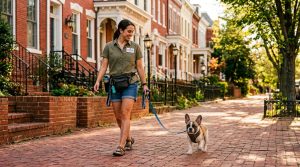
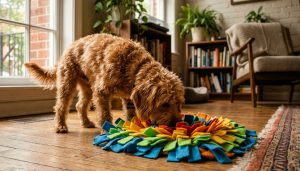
Walk early. Do the real walk in the morning or midday, when the streets are quiet and no one has set anything off yet. A dog who has had a good walk and some mental enrichment settles more easily later on. In July you are balancing heat and fireworks at once, so an earlier walk handles both. Our guide on when it is too hot to walk a dog in DC covers the heat side.
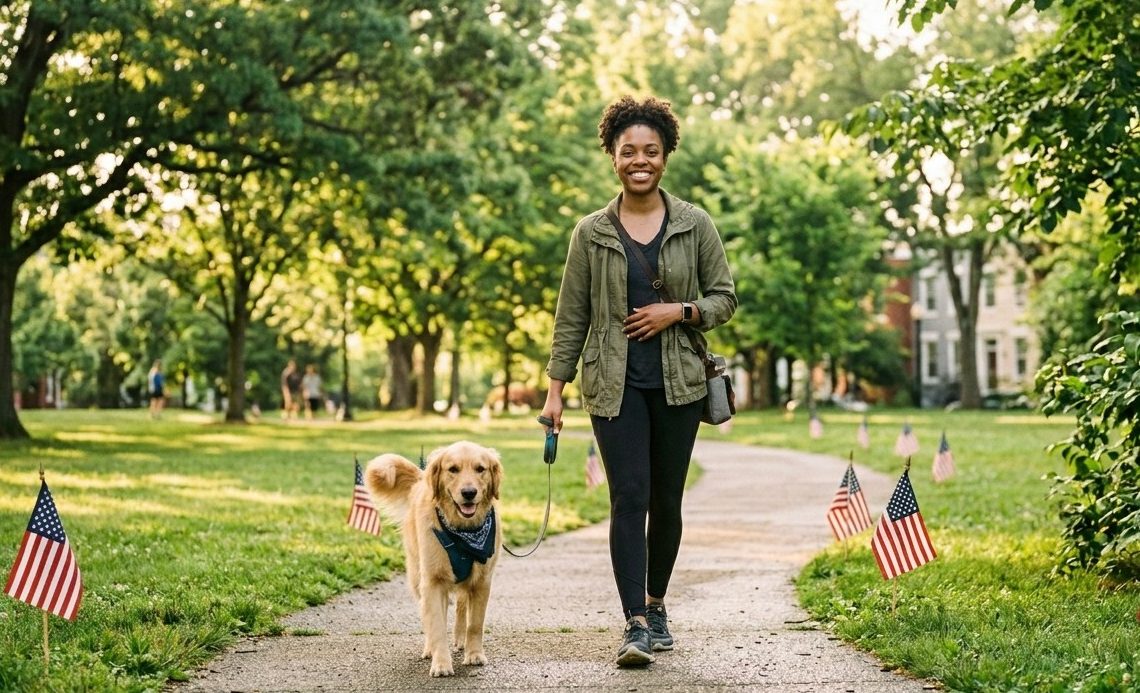
This is the heart of what we do at Saving Fido during the holiday. A well-timed weekday midday walk gets your dog their real outdoor time, exercise, and sniffing while the neighborhood is still calm, so the loud evening is a little easier on everyone. It is daytime dog walking, not evening or overnight care, but on the 4th of July that daytime window is exactly the one that matters most.
For the evening, when the noise starts, the rest is your home setup, and here is what I tell every client. Set up a safe indoor space: an interior room, a fan or white noise to mask the booms, the blinds closed, and a long-lasting chew. Keep your dog inside once the fireworks begin, and never let them out off-leash, not even in a fenced yard, because a panicked dog can clear a fence they have never tried before. The ASPCA’s Fourth of July safety tips are a good reference for the indoor setup.
The Leash and Collar Check That Could Save Your Dog
This is the one I ask every client to take seriously, because it is where the missing-dog stories start. According to Petco Love, more pets go missing on July 4th than any other day of the year, and most of them bolt from a walk or an open door.
Use two points of contact. A harness and a collar, with the leash clipped to both, or a double-ended leash. If a dog backs out of one, the other holds. A flat collar alone is not enough on fireworks week, because a frightened dog can slip it in a second. Check the harness with the two-finger rule: you should be able to slide two fingers under the strap, no more. And make sure tags and microchip information are current before the holiday, not after. If the worst happens, that chip is how your dog comes home.
What If My Dog Is Severely Scared of Noise?
Some dogs do not just dislike fireworks. They tremble, hide, refuse to eat, and stay panicked for hours. If that is your dog, the timing-and-confidence plan still matters, but it is not the whole answer.
Talk to your vet now, not on July 3rd. There are real options: situational calming medication, calming supplements, a snug pressure wrap like a ThunderShirt. The good ones take planning and sometimes a trial run, so a last-minute call will not help much. Your vet knows your dog’s history and can match the right approach.
What does not work is flooding your dog with the noise to toughen them up. That makes the fear worse, not better. Real desensitization, the slow sound work I described earlier, is something you build over weeks and months in the quiet off-season, not something you can force during fireworks week. For the holiday itself, keep the goal simple: lower the exposure, keep them safe, and be patient.
Frequently Asked Questions About 4th of July Dog Walking in DC
Why won’t my dog go outside after the 4th of July?
A dog badly frightened by fireworks can begin to associate the fear with going outside at all, since that is where the booms happened. Even after the holiday, they may hesitate or refuse at the door. Do not force it. Rebuild their confidence slowly with a few low-pressure steps outside, lots of treats, and patience, letting the dog set the pace until outside feels safe again.
How do I keep my dog calm during 4th of July fireworks in DC?
Walk and exercise your dog earlier in the day before any fireworks start, then set up a quiet interior room with white noise for the evening. Keep your dog inside once the noise begins, and use a harness and collar together so a startled dog cannot slip the leash. For severe noise sensitivity, ask your vet about calming options before the holiday.
When do fireworks start on Capitol Hill for the 4th of July?
The official National Mall show is around 9pm on July 4th, but neighborhood fireworks on Capitol Hill typically begin in late June and continue past the holiday. Plan for roughly a nine-day window, not a single night.
Why do more dogs go missing on July 4th?
Fireworks trigger a panic response that overrides training. Dogs bolt away from the noise, slip collars, and clear fences they normally would not. Current ID tags and an up-to-date microchip are your insurance if your dog gets loose.
Is it safe to walk my dog on the 4th of July?
Yes, if you time it right. A morning or midday walk before the noise begins is safe and genuinely good for your dog. Once fireworks start in the evening, keep your dog indoors. Any necessary outdoor trip should be brief, close to home, and on a double-secured leash.
Let’s Plan Your Dog’s 4th of July Together
The Fourth does not have to be the week your dog dreads, or the start of weeks of fear afterward. With the daytime walk timed right, the leash doubled up, and a calm plan for the evening, your dog can come through it far more settled. And if fireworks have already left your dog afraid to go outside, that is something we can work on together, patiently, one walk at a time.
If you want to talk it through, start with a free meet-and-greet. No pressure, no sales pitch. Just a real conversation about your dog and how to get them through fireworks season safely. You can set it up at savingfidodogwalking.com/contact.
Every dog deserves a walk of their own.

Tracy Murray is the founder of Saving Fido Dog Walking, the only Fear Free and BAT Foundations certified private dog walker exclusively serving Capitol Hill. She’s also Pet First Aid and CPR certified, and she personally trains every walker on her team before they ever clip on a leash.