If you were warm on your walk this morning, your dog was in a different situation entirely.
You sweated through your shirt. Your body cooled itself the way it was designed to. You got home, drank some water, and moved on with your day.
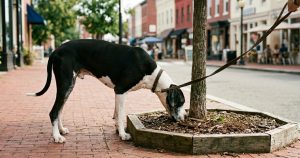
Your dog does not sweat through their skin. They cool themselves almost entirely through panting, pushing hot air out and pulling cooler air in through airways that were never designed for a DC summer. On a July morning on Capitol Hill, a dog walking the sunny side of a brick block is four inches from a surface that can reach 109°, wearing a fur coat, with almost none of the cooling mechanisms you take for granted.
This is the summer walking guide I give every client when June arrives on the Hill. It covers why Capitol Hill brick is different from concrete, which dogs are most at risk in the heat, how to read a block before you walk it, and what time of day actually matters. Not generic summer pet safety advice. The specific things that apply to these specific blocks.
Quick Answer: This Capitol Hill dog walker summer guide covers the specific decisions that keep your dog safe on these blocks from June through August. The most important thing a Capitol Hill dog walker does in summer is not choosing a shorter walk. It is choosing the right side of the right street at the right time of day. Brick sidewalks reach 109° when concrete hits 104°. The north side of east-west streets and the shaded side of numbered streets stay meaningfully cooler throughout the day.Dogs cannot sweat. They cool through panting alone. On Capitol Hill in July that gap between what you feel and what your dog feels is the whole ballgame. Saving Fido is the only multi-certified private dog walker that exclusively serves Capitol Hill, and this guide is what we use every summer on these blocks.
I’m Tracy, founder of Saving Fido and the only Fear Free and BAT Foundations certified private dog walker exclusively serving Capitol Hill. I’m also Pet First Aid and CPR certified, I’ve worked with dogs since 2007 (first at the Washington Humane Society, now the Humane Rescue Alliance), and I have a psychology degree that’s turned out to be just as useful with dogs as it is with people. Every walker on my team trains under me personally before taking on even one client of their own. I have strong opinions about summer. Here is what I have learned.
Why Capitol Hill Brick Makes Summer Walking Different From Anywhere Else in DC
Capitol Hill is one of the most beautiful neighborhoods in Washington, DC. It is also one of the most demanding on a dog in summer. The reason is the brick.Most of the District’s residential neighborhoods mix concrete and asphalt sidewalks with occasional brick. Capitol Hill is different. The historic preservation requirements that make these blocks look the way they do also mean that the sidewalks underfoot are predominantly brick. And brick behaves differently than concrete in heat in ways that matter directly to your dog.
A Frostburg University study found that brick sidewalks reach 109° when concrete hits 104°. That five degree difference does not sound significant until you consider that your dog is walking directly on that surface with paw pads that, while tougher than human skin, can still burn. And brick releases that heat more slowly than concrete. A concrete sidewalk that baked all afternoon will cool relatively quickly after sunset. A Capitol Hill brick sidewalk holds that heat well into the evening. The 7pm walk that feels comfortable to you may still be happening on a surface that has not meaningfully cooled since 3pm.There is also the concentration factor. Capitol Hill’s brick coverage is not scattered. It runs block after block through the residential streets closest to the Capitol, along the corridors your dog walks every single day. A dog walking a mixed neighborhood might hit one or two brick blocks on a given route. A dog walking Capitol Hill in summer is on brick for most of the walk. That changes the math on every walk from June through August.
Which Capitol Hill Dogs Are Most at Risk in Summer
Every Capitol Hill dog needs extra care in summer. But some dogs need a different level of attention entirely. Here are the five categories that a professional Capitol Hill dog walker watches most carefully when temperatures rise.- Dark coated dogs. A black car in a parking lot gets hotter than a white one. The same principle applies to your dog’s coat. Dark and black coated dogs absorb solar heat through their fur at the same time their paws are absorbing conducted heat from the brick below. Two heat sources at once. If you have a dark coated dog, the shade calculation on every block matters more than it does for a light coated dog.
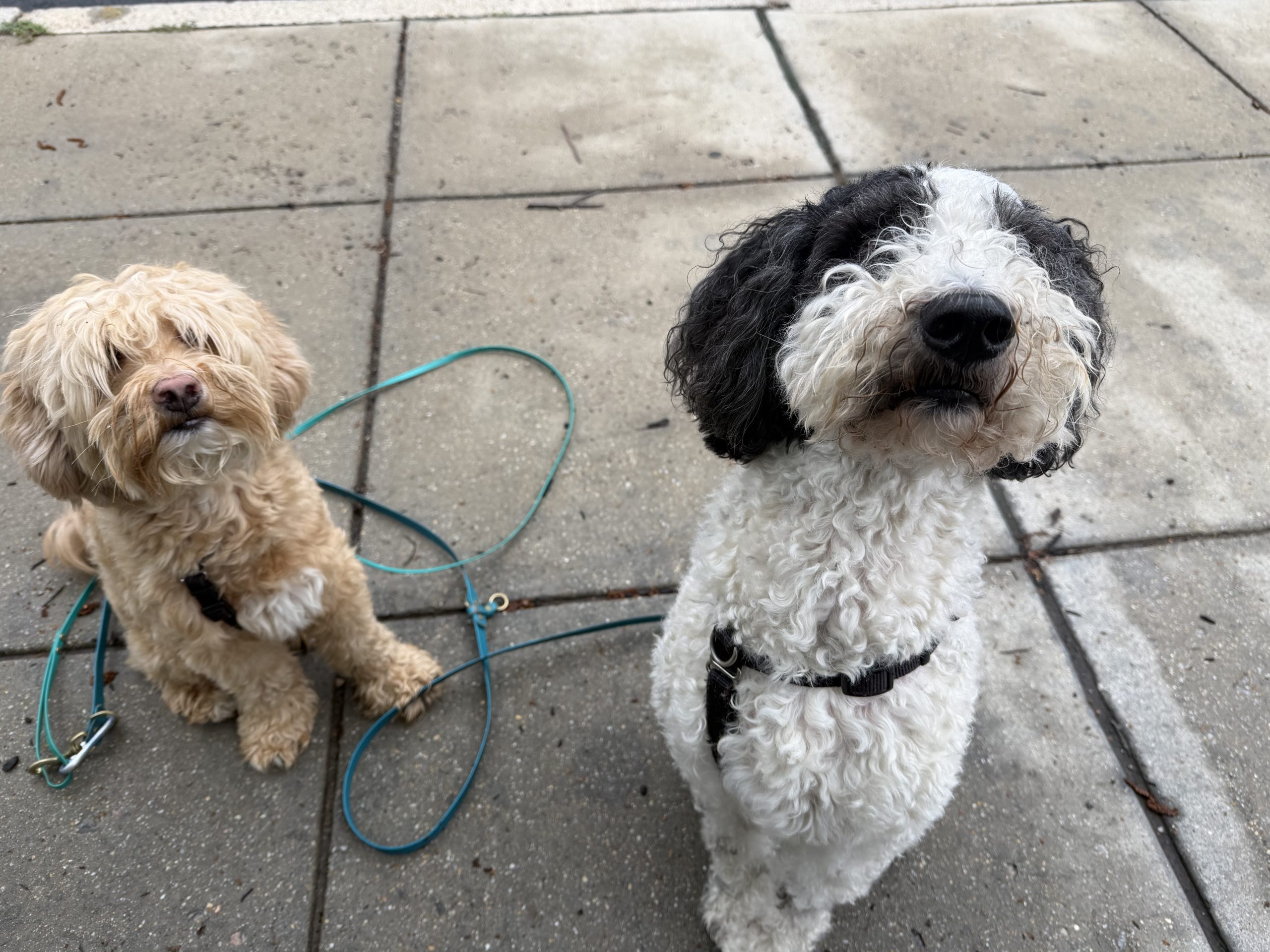
- Double coated breeds. Australian shepherds, border collies, golden retrievers, Labrador retrievers, and certain doodle mixes. These are some of the most popular dogs on Capitol Hill and some of the most at risk in summer heat. The dense undercoat that protects them in cooler months traps body heat in July in a way their owners do not always register because the dog still looks eager and ready to go. Eagerness is not the same as being okay. The poodle cross in a doodle mix does not eliminate the double coat risk. Many doodles carry the dense undercoat of whichever breed they are mixed with and their owners are often surprised to learn they need the same precautions as a purebred retriever in summer. These dogs need the earliest possible morning windows and the most attentive monitoring of any breed on Capitol Hill in summer.
- Senior dogs and puppies. Both ends of the age spectrum regulate body temperature less efficiently than healthy adult dogs. A senior dog on Capitol Hill brick in July is managing heat less effectively than a three year old dog on the same block. A puppy has not yet developed the full thermoregulatory capacity of an adult. Both need shorter windows and more frequent rest in shade.
- Overweight dogs. Extra body fat acts as insulation, trapping heat inside and putting additional strain on the cardiovascular system during exercise. An overweight dog walking Capitol Hill brick in summer is working significantly harder to stay cool than a dog at a healthy weight.
- Brachycephalic breeds. Bulldogs, French bulldogs, pugs, Boston terriers. Capitol Hill has a lot of these and they deserve special mention. Brachycephalic dogs have compressed airways that make panting less effective as a cooling mechanism. The very tool every dog relies on to regulate temperature works at a fraction of its capacity in these breeds. In summer on Capitol Hill brick, brachycephalic dogs overheat faster than almost any other dog and show fewer warning signs before they are in trouble.
If your dog falls into any of these categories, a conversation with your vet before the summer walking season is worth having. For Capitol Hill dogs, Dr. Dan Teich of District Veterinary Hospital Eastern Market is the neighborhood veterinarian we trust and refer clients to when something needs a professional eye.
What Your Dog Is Actually Feeling on a Hot Capitol Hill Walk
Understanding what is happening inside your dog on a hot Capitol Hill walk changes how you read their behavior entirely.When you get warm, your body activates millions of sweat glands distributed across your entire skin surface. Moisture evaporates. You cool down. It is an extraordinarily efficient system that most of us take completely for granted.
Your dog does not have this. Dr. Teich has written in the Hill Rag that dogs regulate their temperature mainly through evaporative heat transfer via their lungs. Unlike people, they do not have very active sweat glands. Panting releases a substantial amount of water vapor from the body, making drinking water frequently a necessity especially when it is hot.
On a dry day, panting works reasonably well. On a DC summer day, it does not. Washington DC’s summer humidity, which regularly pushes above 80 percent, means the air your dog is panting into is already saturated with moisture. Evaporative cooling requires dry air. When the air is humid, the panting mechanism loses efficiency rapidly. A dog that could manage a 30 minute walk on a dry 85° day in Denver may be in trouble on an 82° humid morning on Capitol Hill. The temperature on the thermometer is not the whole story. The humidity is doing as much work as the heat.
Add the brick surface temperature of 109° underfoot, the solar heat absorption through the coat, and DC’s humidity reducing the effectiveness of the only cooling system your dog has, and you start to understand why Capitol Hill in summer is a specific and serious environment for dogs.
The early warning signs to watch for on every summer walk are heavy panting that seems out of proportion to the effort, seeking shade without being directed there, reluctance to move forward, whining, and drooling more than usual. These signals look like a tired dog to most owners. A trained walker reads them as a dog who is working harder to stay cool than they should be and adjusts the walk immediately.
How to Read a Block Before You Walk It
This is the skill that separates a Capitol Hill dog walker who knows these streets from an app-based walker following a GPS route. Before stepping onto a block in summer, a professional walker is making three assessments.- The pavement test. Hold the back of your hand on the sidewalk for seven seconds. If you cannot hold it there comfortably, your dog’s paws cannot walk on it. This test takes seven seconds and it is the most important safety check of any summer walk on Capitol Hill. Brick fails this test much earlier in the day and stays hot much longer into the evening than the concrete blocks in other DC neighborhoods.
- The sun and shade read. Look at which side of the street is in shade. On Capitol Hill’s numbered streets, which run north to south, the east facing sidewalk gets morning sun and the west facing sidewalk gets afternoon sun. Swap sides at midday. On the lettered streets and named streets running east to west, the north facing sidewalk stays in shade longer throughout the day. In summer a professional walker is on the shaded side of the street. Not the convenient side. The shaded side. That is a meaningfully cooler walk for your dog without changing the route at all.
- The rowhouse shadow read. Capitol Hill’s historic rowhouses cast shade on the sidewalk at specific times of day depending on the orientation of the block. A walker who has been on these streets every day for years knows where the shade falls at 8am versus 11am versus 3pm. That knowledge is not something an app can replicate. It is something built one walk at a time over years.
The Capitol Hill Dog Walker Summer Guide by Time of Day
This is the practical information you actually need when thinking about what your dog’s walk looks like on a hot Tuesday in July.- Before 8am. This is the best window of the entire day for Capitol Hill dogs in summer. The brick has cooled overnight. The humidity is still relatively low. The sun is low in the sky and the shaded side of numbered streets is in genuine shade. A confident adult dog can walk a normal route in this window with standard precautions. Dark coated dogs, seniors, puppies, brachycephalic breeds, and overweight dogs should still have shortened walks even in this window on the hottest days.
- 8am to 11am. The window is narrowing but still workable with adjustments. Pavement temperatures are rising. The pavement test becomes essential before stepping onto brick-heavy blocks. Stay on the shaded side of streets. Prioritize blocks with tree cover. Carry water and offer it every ten minutes. Watch for early warning signs.
- 11am to 3pm. This is the most dangerous window for Capitol Hill dogs in summer. Brick pavement temperatures peak in this range. The humidity is at its highest. The sun is overhead and shade is limited. At-risk dogs should not be walking on Capitol Hill brick in this window on hot days. For all dogs this is the window where the Inside Walk becomes the right call. Here is exactly what an Inside Walk looks like when the pavement makes outdoor walking the wrong call.
- 3pm to 7pm. Temperatures are technically dropping but brick holds heat. The pavement test is still essential. Many owners assume that 5pm is safe because the worst of the day has passed. On Capitol Hill brick that assumption is wrong. The surface that reached 109° at noon has not meaningfully cooled by 5pm. The east side of numbered streets is now in shade. Use it.
- After 7pm. This is the second workable window of the day. Brick is finally releasing its heat. Humidity may still be elevated but air temperature is dropping. This is a reasonable window for most dogs with standard precautions. Dark coated dogs and brachycephalic breeds should still keep walks shorter than usual even in this window on the hottest weeks of the year.
What a Professional Capitol Hill Dog Walker Does Differently in Summer
The pavement test, the shaded side of the street, and reading early warning signs before they become obvious are the foundation of every summer walk. Those are covered above, and a professional does all three on every single walk from June through August, not just on the worst days. Two more things set a professional summer apart.The Inside Walk is a real option, not a last resort. On the days when Capitol Hill pavement makes outdoor walking the wrong call, Saving Fido does not cancel. We do an Inside Walk. Same visit, same walker, same time. Nose work and enrichment inside your Capitol Hill rowhouse until the heat breaks. Your dog’s day does not stop because the weather got hot. It just looks a little different. We wrote a whole post on how Capitol Hill dogs still get their walk on the hottest days if you want to see what that visit actually involves. Walk reports include heat observations. After every summer visit you get a full report. How the walk went. What the conditions were. How your dog handled the heat. Whether anything looked off. If something seemed wrong you hear about it that day, not at the end of the month. That is what a professional Capitol Hill dog walker does in summer. Not a longer walk. Not a faster walk. The right walk, at the right time, on the right side of the street.
Frequently Asked Questions About Dog Walking on Capitol Hill in Summer
How hot is too hot to walk a dog on Capitol Hill?
The short version is that 85° with high humidity is the point at which Capitol Hill brick becomes a real concern for most dogs, and the pavement test is the most reliable check on any given day. Hold the back of your hand on the sidewalk for seven seconds. If you cannot hold it there comfortably, your dog should not walk on it. We break the whole question down, temperature, humidity, and how to decide, in our full guide to when it is too hot to walk a dog in DC.Why is Capitol Hill worse for dogs in summer than other DC neighborhoods?
The brick. Capitol Hill’s historic brick sidewalks reach 109° when concrete hits 104°, according to a Frostburg University study. Capitol Hill’s brick coverage runs block after block through the residential streets closest to the Capitol. A dog walking Capitol Hill in summer is on brick for most of the walk in a way that is not true in neighborhoods with more mixed sidewalk surfaces.What does humidity do to a dog on a summer walk?
Dogs cool through panting. Panting relies on evaporative cooling that happens through the airways. Evaporative cooling requires relatively dry air. When DC’s summer humidity pushes above 80 percent, the air your dog is panting into is already saturated and the cooling mechanism loses efficiency rapidly. A dog that could manage a comfortable walk on a dry 85° day may be struggling on an 82° humid Capitol Hill morning.Which dogs are most at risk on Capitol Hill in summer?
Five categories need extra attention. Dark coated dogs absorbing solar heat through their fur. Double coated breeds including Australian shepherds, border collies, golden retrievers, Labrador retrievers, and doodle mixes whose dense undercoat traps body heat in summer. Senior dogs and puppies with less efficient temperature regulation. Overweight dogs where extra fat traps body heat. And brachycephalic breeds like bulldogs, French bulldogs, and pugs whose compressed airways make panting less effective as a cooling mechanism.What are the early signs my dog is overheating on a Capitol Hill walk?
Watch for five things. Panting that seems out of proportion to the effort or pace of the walk. Seeking shade without being directed there. Reluctance to move forward or slowing significantly. Whining. Drooling more than usual. These signals can look like a tired dog to most owners. They are your dog telling you the walk needs to change now, before the situation becomes a real emergency.Ready to Talk About Summer Walks for Your Dog?
If you are looking for a Capitol Hill dog walker who thinks about the brick temperature, the humidity, the shade on the north side of east-west streets, and which dogs are most at risk before every single summer walk, that is exactly what Saving Fido does. We are the only multi-certified private dog walking company that exclusively serves Capitol Hill. Fear Free certified. Pet First Aid certified. CPR certified. Every walk private. Every report honest. Every summer walk decision made with your specific dog in mind.Want to talk about whether we are a good fit for your dog this summer? Set up a virtual meet-and-greet. No pressure. No sales pitch. Just a real conversation about your dog and what they need on these specific blocks.
Every dog deserves a walk of their own.
Tracy Murray is the founder of Saving Fido Dog Walking, the only Fear Free and BAT Foundations certified private dog walker exclusively serving Capitol Hill. She’s also Pet First Aid and CPR certified, and she personally trains every walker on her team before they ever clip on a leash.