
When a dog is adjusting to a back to school schedule, the real shift happens midday, not at the door in the morning. A quiet house needs a midday routine that stands in for the attention, activity, and company that just disappeared, and the surest way to head off afternoon restlessness and window barking is matching that break to what the dog actually needs, whether that is mental work, real decompression, or simple daily structure.
Every August, Capitol Hill homes go through the same shift. A house full of summer noise, snacks, and spontaneous backyard time turns into six or eight quiet hours. Dogs pick up on that change right away, and most of them need help settling into it.
Quick Answer: A dog adjusting to a back to school schedule needs the midday hours between roughly 11:00 AM and 3:00 PM covered with the right kind of visit, mental work for a restless dog, slow decompression for an anxious one, or steady routine for a dog who just needs structure. The first week matters most. A dog who gets consistent midday support settles into the new rhythm quickly. A dog who does not often gets more anxious instead of less.
Tracy Murray has been working with dogs since 2007, starting at the Washington Humane Society (now the Humane Rescue Alliance) before becoming a professional dog walker and eventually founding Saving Fido. She’s Fear Free and BAT Foundations certified, Pet First Aid and CPR certified, and brings a psychology degree to the job that’s proven just as useful with dogs as it is with their people. Every walker on the team trains under Tracy personally before taking on a single client. Saving Fido remains the only Fear Free and BAT Foundations certified private dog walking company that exclusively serves Capitol Hill, and every walk is matched to what a dog actually needs that day.
Why Does the Midday Window Get Harder When School Starts?
Morning departures get most of the attention, but the stretch between 11:00 AM and 3:00 PM is often the hardest part of the day for a Capitol Hill dog. Three things happen at once during that window.
- Unused energy has nowhere to go. Without a family member around to play with, walk, or simply notice them, a dog’s pent-up energy turns into pacing, chewing, or standing watch at the door.
- Neighborhood noise picks up. Delivery trucks, mail carriers, and early school dismissal traffic move through Barracks Row and North Carolina Avenue right in this window, and a bored dog near a front window reacts to every one of them.
- The midday social anchor disappears. Summer routines are full of small check-ins. Losing all of them at once, rather than gradually, is what makes the adjustment hard.
How Does Afternoon Window Reactivity Develop in a Capitol Hill Home?
Capitol Hill homes put a dog close to the sidewalk, which means every passerby becomes visible and audible. A dog with nothing else to do turns the front window into entertainment, and every time a pedestrian walks past and moves on, the dog’s brain files that as a win. The barking worked. The intruder left. That pattern repeats and strengthens itself within days, and window barking is genuinely self-reinforcing behavior, not just a bad habit. If your dog already runs anxious rather than bored, here is what to look for in a walker who handles stress well.
Setting Up the House for Afternoon Rest
- Move the primary dog bed toward the middle or back of the house, away from front-facing windows.
- Use a fan, white noise machine, or low radio to soften sudden street sounds from deliveries or construction.
- Lower the blinds during peak pedestrian hours, especially on blocks near Lincoln Park or Stanton Park where foot traffic is heaviest.
- Give your dog a designated chew or food puzzle for the window-facing hours, so their attention has somewhere else to go.
What Is the Right Midday Walk for a Dog Adjusting to a Back to School Schedule
A generic lap around the block on a fixed schedule is not what solves this. The dog in front of us tells us what they need that day, and the midday visit should match it.
| What the Dog Is Showing | The Walk That Fits |
|---|---|
| Bored, restless, chewing, high energy | Enrichment Walk |
| Overwhelmed, anxious, wound up | Decompression Walk |
| Settled, but needs daily structure | Standard Walk |
The Enrichment Walk, for the Restless Thinker
A dog coming out of an active summer usually needs more than movement to settle down. An Enrichment Walk gives the brain something to do, with novel sniffing spots and small problem-solving built into the route. Twenty five minutes of real mental work tires a dog out more completely than an hour of fast walking, and it sets them up for a genuine afternoon nap instead of restless pacing.
The Decompression Walk, for the Overwhelmed Pup
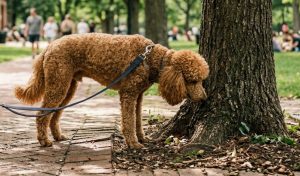
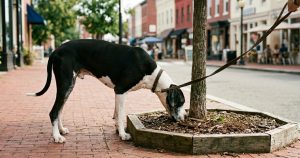
Some dogs do not need more stimulation during a schedule change. They need less. A Decompression Walk is slow, sniff led, and paced entirely by the dog. Sniffing lowers heart rate and settles the nervous system, which turns a stressful afternoon into a genuine reset instead of another demand on an already tired dog. If you have ever wondered why this works, here is what sniffing actually does for a dog’s nervous system.
The Standard Walk, as the Dependable Anchor
Dogs who do best on predictability benefit most from a Standard Walk. Seeing the same walker, covering familiar blocks, and having a reliable bathroom break in the middle of the day breaks up the isolation without needing anything fancy. For a lot of dogs, consistency is the actual enrichment.
What Does the First Week Back to School Actually Look Like for a Dog?
The first few days are usually the hardest, and knowing what to expect helps you catch problems early instead of after they become a habit.
- Day one or two: Confusion is normal. A dog may follow the last family member to the door, wait by it longer than usual, or seem unsettled the first time the house goes fully quiet.
- Day three through five: This is when reactive habits start forming if the midday hours are unstructured. Window barking, destructive chewing, or excessive vocalizing tend to show up here if nothing has filled the gap.
- End of week one: A dog with a consistent midday visit usually starts settling into the new rhythm. A dog without one often gets more anxious, not less, because the pattern of being alone and undersupported keeps repeating.
Catching this early, in the first week rather than the first month, is the difference between a smooth transition and a habit that takes real work to undo later. If you are still deciding whether a midday visit is the right move at all, here is how to know if your dog actually needs a walker.
Frequently Asked Questions About Midday Dog Care on Capitol Hill
Why is my dog frantic when the kids get home from school?
A frantic homecoming greeting usually means a dog built up unused mental and physical energy over a long, unstructured afternoon. A midday visit that matches their needs drains that energy earlier in the day, so the reunion is calm instead of chaotic.
Is a longer walk always better for a dog left home alone?
Not always. A focused twenty five minute walk built around sniffing or mental work often leaves a dog more settled than a longer, rushed walk on hot pavement. Quality of engagement matters more than the length of the leash time.
How do I know which walk type my dog actually needs?
Watch how your dog acts when you get home. Chewing, bouncing, or getting into things points toward an Enrichment Walk. Jumpiness, hypervigilance, or an inability to settle points toward a Decompression Walk. A dog who is simply used to routine usually does well with a Standard Walk.
Does my dog need a different walk type every day, or should it stay the same?
It can change day to day. A dog who had an exciting morning and a dog who had a quiet one do not need the same midday visit. Reading the dog in front of us, rather than following a fixed script, is the whole point.
Giving Your Dog a Midday Anchor This School Year
Back to school changes the rhythm of the whole house, and dogs feel that shift as much as anyone. Recognizing what the afternoon gap actually asks of a dog, and matching their midday break to it, turns a quiet house into a calm one instead of an anxious one.
At Saving Fido, we serve Capitol Hill exclusively, and every walk is built around what a dog actually needs that day. Whether that is an Enrichment Walk, a Decompression Walk, or a steady Standard Walk, the whole visit is theirs, private and one on one, with a real update after every walk. You can learn more about how we structure each visit on our services page.
If you want a dependable midday routine for your dog this school year, we would love to meet them. Set up a virtual meet and greet at savingfidodogwalking.com/contact/ and let’s find the right fit.
Every dog deserves a walk of their own.

Tracy Murray is the founder of Saving Fido Dog Walking, the only Fear Free and BAT Foundations certified private dog walker exclusively serving Capitol Hill. She’s also Pet First Aid and CPR certified, and she personally trains every walker on her team before they ever clip on a leash.