It usually starts as a small, nagging thought. You are in a meeting that ran long, or stuck on a call you cannot leave, and somewhere in the back of your mind is your dog at home, waiting. You picture them by the door. You wonder how long it has been. And underneath the wondering is a quieter feeling you do not love admitting to: guilt.
If you have ever sat at your desk on Capitol Hill doing the math on how many hours your dog has been alone, you are not a bad dog parent. You are a dog parent with a job and a dog who needs more than your schedule can always give. That gap is real, and the question you are actually asking is not “do I need a dog walker.” It is “am I doing right by my dog.” Those are different questions, and the second one matters more.
Quick Answer: If you are asking do I need a dog walker, the honest test is simple. If your dog is regularly alone for more than four to six hours during the day, shows signs of pent-up energy or restlessness when you get home, or you find yourself feeling guilty about your work schedule, a midday walk almost certainly helps. It is not about whether you are failing. It is about closing the gap between the hours your dog needs filled and the hours you can actually be there. A walker fills that gap with something good.
I’ve been working with dogs since 2007, starting at the Washington Humane Society (now the Humane Rescue Alliance) before becoming a professional dog walker and eventually founding Saving Fido. I’m Fear Free and BAT Foundations certified, Pet First Aid and CPR certified, and I bring a psychology degree to the job that’s proven just as useful with dogs as it is with their people. Every walker on my team trains under me personally before taking on a single client. I have had this conversation with a lot of dog parents, and it almost always starts with guilt and ends with relief. Let me walk you through how to actually tell.
How Long Is Too Long for a Dog to Be Alone?
There is no single magic number, because it depends on the dog. A calm senior who sleeps most of the day is in a different situation than a young, busy dog who is just getting started by the time you leave. But there are some reasonable guideposts.
Most adult dogs can comfortably hold their bladder for somewhere around six to eight hours, though that is the physical ceiling, not the goal. The American Kennel Club offers similar guidance on how long dogs should be left alone. The emotional and mental side of being alone is a separate thing entirely. A dog can technically make it eight hours without a bathroom break and still have a genuinely long, dull, lonely day. Puppies and seniors need breaks much more often. And a dog who is alone from the time you leave in the morning until you get home at night is asking a lot of themselves, even if they never have an accident.
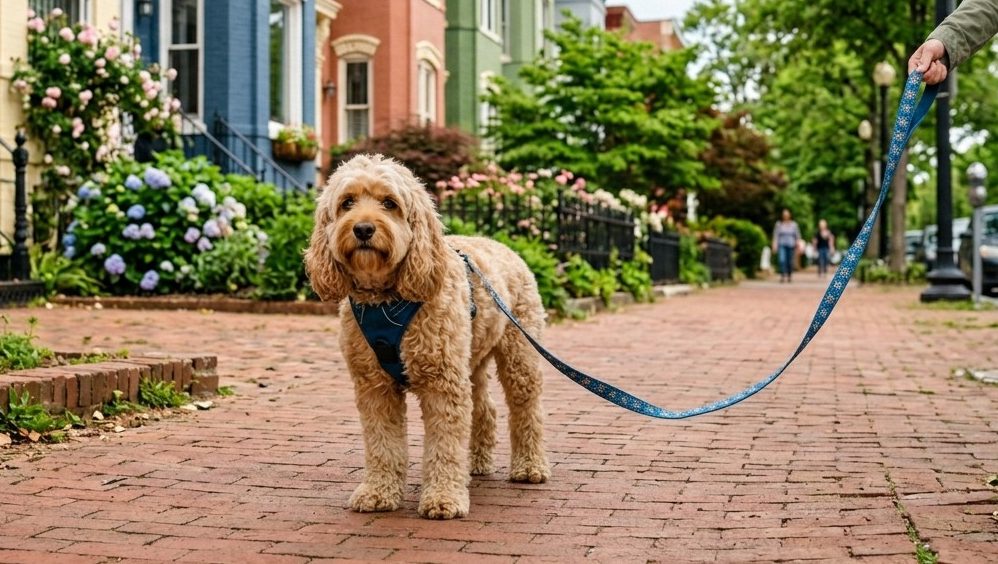
Here on the Hill, a lot of dogs are home alone in a rowhouse or condo while their people are at work downtown, then head out to one of Capitol Hill’s parks when someone can take them. Four hours is usually fine. Once you are pushing past six, especially for a younger or senior dog, a midday break stops being a luxury and starts being something your dog genuinely benefits from. The break in the middle resets their day. It turns one long, empty stretch into two manageable ones with something to look forward to in between.
What Are the Signs Your Dog Needs a Walker?
Dogs tell you what they need. They just do not do it in words. If you are asking do I need a dog walker and you are not sure, the answer is usually written in your dog’s behavior, especially in the first hour after you get home.
Watch for the dog who greets you like you have been gone a month, then cannot settle. The one who has started chewing things they never used to, or who has gotten louder during the day in a way your neighbors have mentioned. The one who paces, or who has so much energy at 7pm that a calm evening feels impossible. None of these mean your dog is bad or broken. They usually mean your dog has more in their tank than their day is giving them room to spend.
On the flip side, some dogs go the other direction. Instead of bouncing off the walls, they get a little flat. Less interested. A bit checked out. A long, unbroken day alone can dull a dog the same way it can wind one up. Both are the same message wearing different clothes: this day was longer than it needed to be.
And then there is the simplest sign of all, which has nothing to do with the dog. If you are worried, that counts. If you are checking the camera at noon, doing the hours math, feeling that pull in the middle of a workday, your own peace of mind is a real reason to close the gap. You should not have to spend your afternoons quietly anxious about whether your dog is okay.
Do I Need a Dog Walker, or Am I Just Feeling Guilty?
This is the one I most want to put to rest, because it is the thought that keeps good dog parents stuck. No. Getting your dog a walk in the hours you cannot be there is not outsourcing your dog. It is one of the most thoughtful things you can do for them.
You will always be your dog’s person. You are the one they wait for, the one they love with their whole body, the one they run to when something is scary. A walker does not replace that and would never want to. What a walker does is give your dog a good middle to their day, and give your dog a second safe person to trust. That does not shrink the bond with you. It makes your dog’s world a little bigger.
The dog parents I work with on the Hill are not people who do not care. They are people who care so much that the gap in the day bothers them. Hiring help is not the opposite of being a great dog parent. It is what being a great dog parent looks like when your dog needs something during hours you cannot give.
What Does a Walker Actually Do During the Day?
A good midday visit is more than a lap around the block. The whole point is that your dog gets the kind of walk they actually need, not a generic one. At Saving Fido, that means matching the walk to the dog rather than selling time on a clock. There are three kinds.
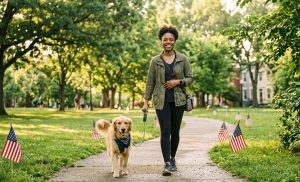
An enrichment walk is for the dog who needs their brain worked, not just their legs. New routes, varied terrain, things to investigate and solve. They come home satisfied instead of looking for trouble. A decompression walk is slow, sniffy, and led by the dog, built for the dog who gets overwhelmed easily and needs to settle their own nervous system at their own pace. A standard walk is the dependable daily break: same walker, familiar route, the steady anchor in the middle of the day that a lot of dogs simply count on. None of these is better than the others. They are just different, matched to what your dog needs.
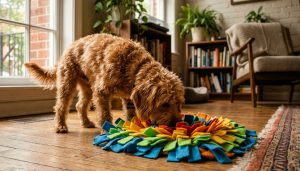
And on a dangerous-heat day in a DC July, or in ice, or any genuinely unsafe condition, the walk becomes an inside walk. Your dog still gets a brief, safe potty break outside, then comes in for nose work and indoor games instead of hot pavement. Same visit, same time, same walker. It is never a cancellation. It is just what a walk becomes when going out would not serve the dog.
After every visit, you get a walk report: photos and a real note about how your dog did. Not “great walk today,” but something specific to your dog, so you actually know how their afternoon went instead of guessing.
How Often Does My Dog Actually Need a Walk?
This is where it helps to start honest rather than perfect. Some dogs do beautifully with one midday walk every weekday. Some only need a couple of days a week, on the days nobody can get home. Some thrive on a daily routine they can set their internal clock to.
If you are still asking do I need a dog walker every day, you do not have to commit to everything at once. A lot of the dog parents I work with start with the two or three days that are hardest in their week, see how their dog responds, and adjust from there. The right answer is the one that closes the gap in your dog’s day without manufacturing a problem that was not there. We figure that out together, and it can change over time as your dog’s needs change.
Frequently Asked Questions
How many hours can a dog be left alone?
Most adult dogs can physically manage six to eight hours, but that is the ceiling, not the goal. Puppies and seniors need breaks far more often. Even a dog who never has an accident can have a long, lonely day, which is why a midday walk helps once you are regularly past four to six hours.
Is a dog walker worth it if I work from home some days?
Often yes, on the days you cannot get away. Working from home does not always mean you can break for a real walk between calls. Many Capitol Hill dog parents book a walker only for their busiest days, which is a perfectly good way to use one.
Will my dog get confused or stressed having someone else walk them?
With a consistent walker, the opposite happens. When your dog sees the same trusted person at the door on a regular schedule, that familiarity is calming. The trust builds over time, and a second safe person makes your dog’s world bigger, not more confusing.
How do I know a walker will actually show up?
Ask how they handle consistency before you sign up. The same assigned walker every visit, a real walk report with photos after each one, and clear communication are the signs of a service built to be reliable rather than one juggling a rotating cast of strangers.
What if I only need a walker occasionally?
That is completely normal and a good place to start. You can begin with the hardest days in your week and adjust as you see how your dog responds. There is no requirement to fill every weekday from day one.
Ready to Close the Gap in Your Dog’s Day?
If you have read this far, you already care more than enough. The guilt was never the sign of a problem. It was the sign of a dog parent paying attention. The good news is that the fix is simple, and your dog gets a genuinely better day out of it.
If you want to talk it through, there is no pressure and no sales pitch. Just a real conversation about your dog and whether what we do is the right fit for what they need. You can book a virtual meet-and-greet anytime, and we will figure out the right kind of walk for your dog together.
Every dog deserves a walk of their own.

Tracy Murray is the founder of Saving Fido Dog Walking, the only Fear Free and BAT Foundations certified private dog walker exclusively serving Capitol Hill. She’s also Pet First Aid and CPR certified, and she personally trains every walker on her team before they ever clip on a leash.