You are in a meeting, or on a call, or just trying to get through your afternoon, and somewhere in the back of your mind is a small, quiet question that will not go away. Did the walk happen? Is my dog okay? You picture them home alone, waiting, and you cannot do a single thing about it from where you are.
That low hum of not-knowing is one of the most exhausting parts of leaving a dog at home all day. It is also completely fixable. The fix has a name, and it is the walk report.
Quick Answer: A dog walk report is the update you get after every single visit, a note about what your dog did, how they seemed, and anything worth flagging, usually with a photo. A good one is specific, not generic. It is not “great walk today!” It is a real account from someone who knows your dog well enough to notice when something is different. That last part is the whole point. A walk report is only as good as the person writing it, because its real value is not the summary, it is the noticing.
I founded Saving Fido after years of working with dogs on Capitol Hill, starting back in 2007, first at the Washington Humane Society (now the Humane Rescue Alliance), then as a professional dog walker. Today I’m Fear Free and BAT Foundations certified, Pet First Aid and CPR certified, and I hold a psychology degree that’s turned out to matter just as much with dogs as it does with people. I have written thousands of walk reports, and over the years I have come to think of them as one of the most important things I do, not because they are paperwork, but because they are proof that someone is really paying attention to your dog.
What Should a Good Dog Walk Report Actually Include?
A real walk report has a few parts, and none of them is filler.
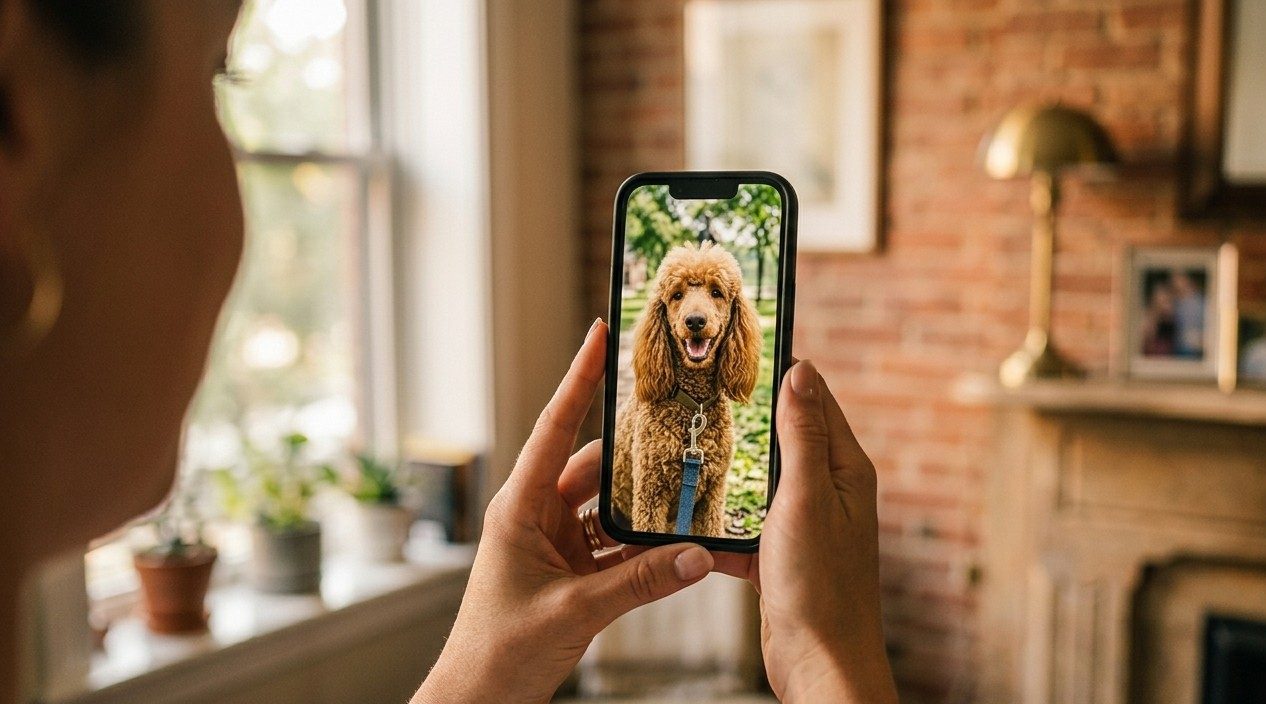
It tells you the walk happened, with a timestamp and usually a photo, so there is no question and no checking a camera. It tells you what your dog did, where they went, what they sniffed, whether they were full of energy or moving slow. It tells you how they seemed, their mood, their body language, whether they were settled or a little off. And it flags anything worth knowing, a limp you should watch, a treat they turned down, a skipped pee, a change from their usual.
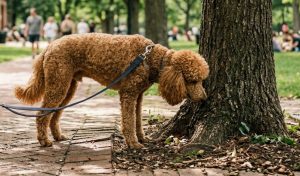
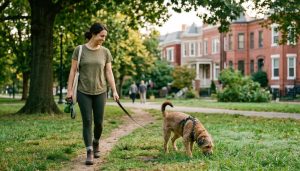
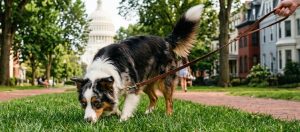
The difference between a forgettable report and a meaningful one is specificity. “Jackson had a great walk” tells you nothing. “Jackson was bouncy today, pulled toward every squirrel on the 200 block of East Capitol, and finished with his usual long drink at the water bowl” tells you your dog was himself. On Capitol Hill, where every block has its own character, that kind of specific detail is also proof that the walk really happened where and how it should have.
Why Is the Walk Report Really About Noticing, Not Reporting?
Here is the thing most people miss about walk reports. The summary is the easy part. The valuable part is the noticing underneath it, and noticing only works if the walker has a baseline.
A baseline is simply knowing your dog’s normal. Their normal energy, their normal pace, their normal appetite for treats, their normal way of greeting the leash. Once a walker knows that, they can catch the deviation, the day the energy is lower, the gait is off, the treat gets declined, the greeting is flat. Those small changes are often the earliest signal that something is going on, and they show up long before anything dramatic does.
A one-time walker, or a different stranger every visit, has no baseline. They can only see how your dog is today. They cannot see that today is different, because they have no yesterday to compare it to. This is why a consistent walker who knows your dog is worth so much more than a warm body with a leash. The report they write is backed by a reference point they have earned over weeks and months. The noticing is the protection, and the noticing requires that history.
How Does a Walk Report Help You Catch Problems Early on Capitol Hill?
This is where the walk report stops being a nicety and starts being genuinely protective.
Because we know each dog’s baseline, we catch the things you might not catch yourself, and certainly things a stranger would miss. A dog who normally inhales his treats and suddenly will not take one. A back leg that is moving a little differently than it did last week. A dog who is usually first to the door now hanging back. None of these is a diagnosis. We are walkers, not vets, and we will never alarm you. But we will tell you, because catching a change early can be the difference between a quick vet check and a problem that grew while no one was watching. As the American Kennel Club notes, many signs of illness in dogs are subtle and easy to miss, which is exactly why a familiar, watchful eye matters.
On Capitol Hill specifically, there are real things to notice. In summer, the brick sidewalks hold heat, and a dog who is slowing down or panting harder than usual is telling you something. When the pavement is genuinely dangerous, the walk becomes an Inside Walk, same visit, same walker, with indoor enrichment instead of hot brick, and your report will tell you exactly that happened and why. The point is that someone who knows your dog and knows these blocks is making a real assessment every single visit, and the report is where that assessment reaches you.
What Does a Walk Report Mean for a Busy Capitol Hill Dog Parent?
If you work long hours, the walk report does something simple and enormous. It takes the question out of your day.
You do not have to wonder whether the walk happened, because the report is right there. You do not have to check a camera under the table in a meeting, because the photo already landed. You do not have to carry that low hum of worry through your afternoon, because the not-knowing is gone, replaced by a real picture of your dog having a genuinely good day. The relief is not that the walk was perfect. It is that you know, and you can put the worry down.
That is the quiet promise of a good report. Your dog’s middle-of-the-day is no longer a blank space you fill with anxiety. It is a known, good thing, and you can get back to your own life.
What Does a Walk Report Mean for a Dog Parent Who Wants to Know Exactly What Happened?
For dog parents who like to understand the details, who want transparency rather than reassurance, the walk report is the answer to “how do I actually know what happens when I am not there?”
It is the evidence. Who walked your dog, when, where they went, how long, how it went, and what was noticed. There is no black box, no booking a stranger and hoping. If your dog has specific needs, a flat-faced breed who cannot handle heat, an older dog you are watching closely, the report shows you those needs are being taken seriously, in writing, every time. You can see the hot-weather call get made. You can track a small change over several visits. The report turns the walk from something you have to trust blindly into something you can actually observe.
That transparency is its own kind of relief. Not the relief of being soothed, but the relief of being in the loop, of knowing precisely what is happening with your dog and that the person handling them understands exactly what your dog requires.
Why Can’t an App or a Rotating Walker Deliver the Same Thing?
The walk report from an app or a revolving roster of strangers can look similar on the surface. A photo, a checkmark, a line of text. But the substance underneath is missing, because the substance is the baseline, and the baseline cannot be faked.
A different walker every visit cannot notice the change, because they do not know your dog’s normal. The report becomes a receipt that the walk occurred, not an account of how your dog actually is. The photo is nice, but it is not backed by the knowledge that today’s energy was lower than last Tuesday’s. What looks like the same deliverable is, in practice, a completely different thing. One confirms a transaction. The other confirms that someone who knows and cares about your dog was truly paying attention. If your dog tends to come home wound up, a walker who knows their baseline will see it in the report and adjust the kind of walk they get.
Frequently Asked Questions About Dog Walk Reports
How often will I get a dog walk report?
After every single visit. Not most visits, not when something notable happens, every walk gets a report with a photo so you are never left wondering.
What if my dog seemed off during the walk?
You will hear about it the same day. Routine notes go in the end-of-visit report; anything concerning gets flagged to you right away, often with a question, since you may know something from home that explains it.
Will the report tell me if it was too hot to walk outside?
Yes. On dangerous-heat days, the walk becomes an Inside Walk, same visit, same time, same walker, with indoor enrichment instead of hot pavement, and your report will tell you exactly that and why.
Is a photo always included?
Yes. Every report includes at least one real photo of your dog from that day’s visit, so you can see for yourself how they are doing.
Why does having the same walker matter for the report?
Because the most valuable part of a report is noticing change, and you can only notice change against a known baseline. A consistent walker who knows your dog’s normal catches things a rotating stranger never could.
Ready to See What a Real Walk Report Looks Like for Your Capitol Hill Dog?
If you are tired of wondering how your dog’s day went, or you just want to actually know what happens when you are not there, we would love to show you. With Saving Fido, your dog has a consistent walker who learns their normal and tells you, after every visit, how they really are.
Let’s set up a free meet-and-greet at savingfidodogwalking.com/contact/ and talk about your dog and whether what we do is the right fit for what they need.
Every dog deserves a walk of their own.

Tracy Murray is the founder of Saving Fido Dog Walking, the only Fear Free and BAT Foundations certified private dog walker exclusively serving Capitol Hill. She’s also Pet First Aid and CPR certified, and she personally trains every walker on her team before they ever clip on a leash.