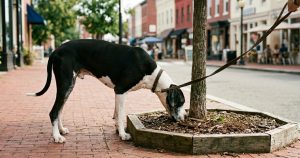
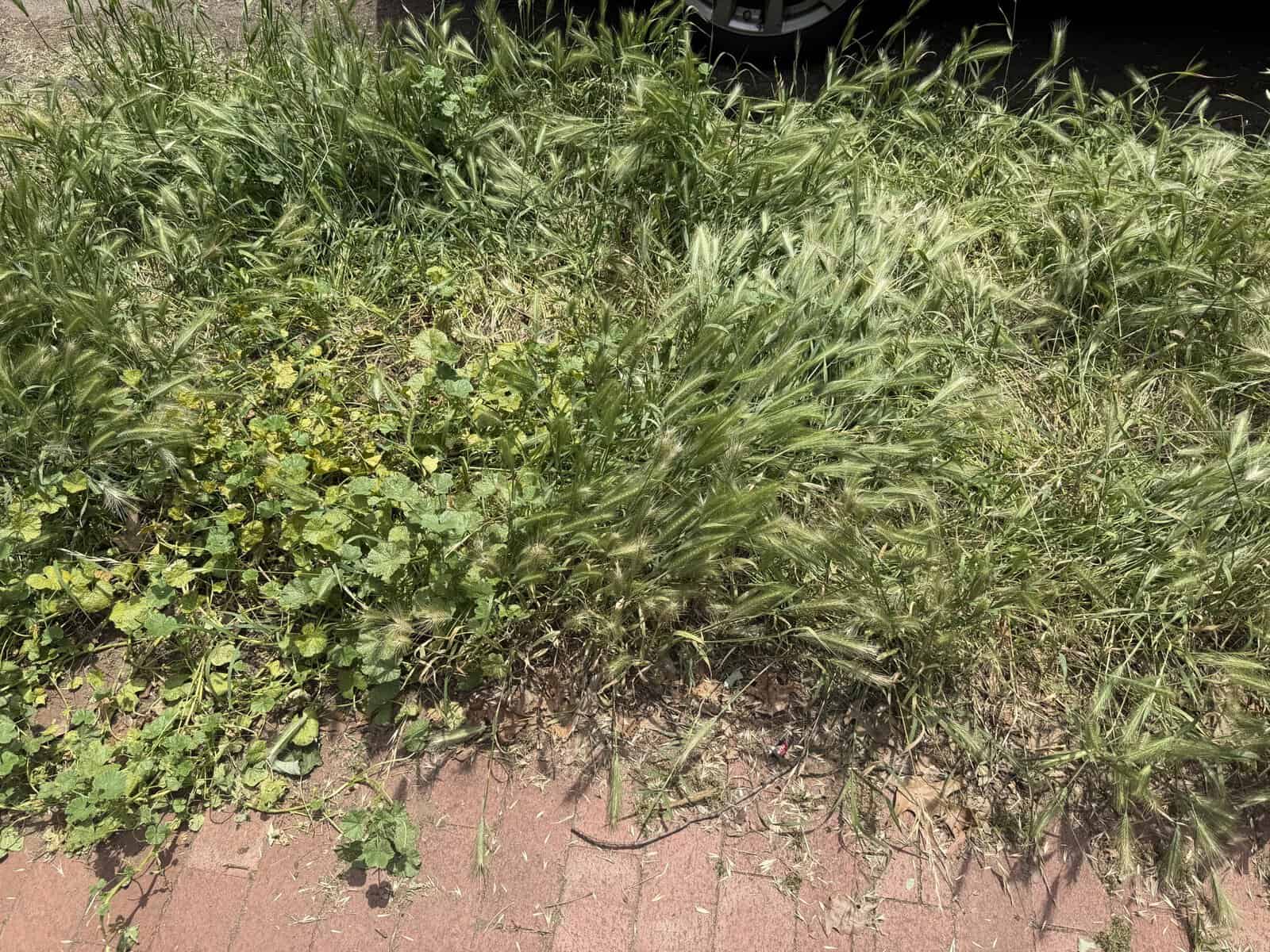
That soft green grass in the tree box outside your door is about to become one of the most dangerous things your dog walks past all summer. Most people won’t notice until it’s already in their dog’s paw.
Foxtails are a wild barley grass with bristly seed heads, and right now, on Capitol Hill, they’re soft and green and look completely harmless. As the weather warms and they dry out, those seed heads break apart into sharp, barbed seeds called awns that burrow into a dog’s paws, ears, nose, eyes, and skin, moving one direction only: inward. Mild cases mean irritation. Serious cases mean a vet visit, sometimes surgery. The good news is they’re easy to avoid once you can recognize them, and the best time to learn is now, while they’re still green.
Quick Answer: Foxtails are a barbed wild barley grass that grows all over Capitol Hill in summer. While green, they’re soft and mostly harmless. As they dry, the seed heads break into sharp, one-directional barbs called awns that burrow into a dog’s paws, ears, nose, eyes, and skin, sometimes requiring surgery to remove. To keep your dog safe: learn to recognize the plant now while it’s green, steer your dog around it, and check paws, ears, and face after every walk through grassy or overgrown areas. Call your vet if your dog won’t stop licking a paw, sneezes violently, or shakes their head after a walk.
I founded Saving Fido after years of working with dogs on Capitol Hill, starting back in 2007, first at the Washington Humane Society (now the Humane Rescue Alliance), then as a professional dog walker. Today I’m Fear Free and BAT Foundations certified, Pet First Aid and CPR certified, and I hold a psychology degree that’s turned out to matter just as much with dogs as it does with people. I personally train every Saving Fido walker before they’re trusted with a single client. I see this every single summer: the same tree boxes, the same fence lines, the same surprised dog parents in July. This is the post I wish every dog parent on the Hill read in early June. If you’re the kind of person who wants to actually understand a hazard rather than just be told to worry about it, here’s the full picture: what foxtails are, what they look like at every stage, why they’re dangerous, where they grow on the Hill, and exactly what to do about them.
What Exactly Is a Foxtail?
Foxtail is a common name for several wild grasses whose seed heads look like a fox’s tail, bushy, bristly, tapering to a point. The one you’re most likely seeing on Capitol Hill is a barley grass, most likely wall barley, sometimes called mouse barley or hare barley. There’s a detail here that makes this a genuinely local story and not a warning borrowed from somewhere else: this particular grass is considered invasive and relatively new to the Eastern United States. For years foxtails were thought of as a West Coast and Southwestern problem, the bane of dogs in California. That’s been changing. The grass has spread east, and it’s here now, in our tree boxes and along our sidewalks.
What makes foxtails different from ordinary grass is the seed. Instead of a smooth seed head, foxtail forms a cluster of needle-like bristles called awns. Each awn is lined with tiny backward-facing barbs, the same idea as the barbs on a porcupine quill. Those barbs aren’t an accident. The plant evolved them so its seeds would catch on the fur of a passing animal, ride along, and drop off somewhere new to grow. It’s a clever survival design. It’s also exactly what makes the plant dangerous to your dog, because a seed built to travel one direction through fur will travel the same one direction through skin.
What Do Foxtails Look Like, Green Versus Dried?
This is the part that matters most, and the part most people get wrong.
When foxtail is green and still attached to the stem, like in the photos here, it’s relatively harmless. The awns are soft. They bend. They’re not yet built to detach and burrow. A dog brushing past green foxtail is usually fine. This is why the green stage lulls people. It looks like grass because, right now, it mostly behaves like grass.
Then the weather warms and the plant dries. The green fades to gold and then to a pale straw color. The soft awns stiffen into sharp, brittle bristles. The seed head, which was holding together as one tidy unit, breaks apart into individual barbed segments. Now each segment is a tiny spear with backward barbs, loose, ready to catch on anything, pointing one direction. That’s the dangerous stage.
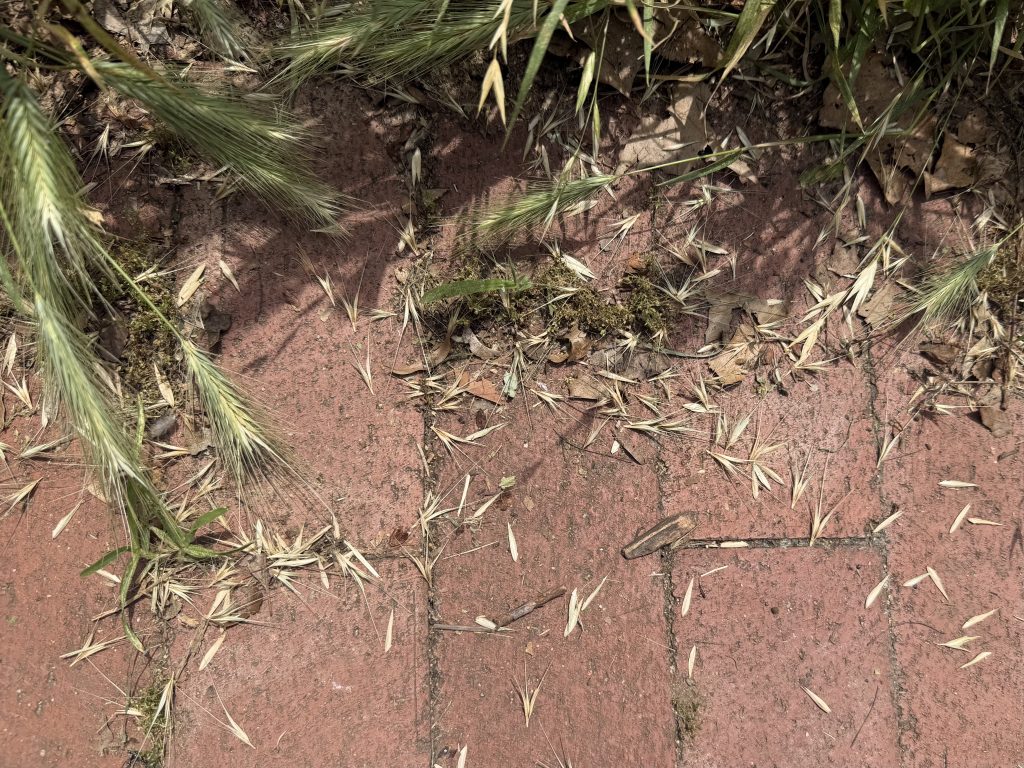
Here’s the trap. People learn to recognize the scary dried version, the one that obviously looks dangerous, and they miss the soft green version that’s the same plant a few weeks earlier. By the time the plant looks like a threat, the seeds are already dropping into the dirt and grass where your dog sniffs. If you only know the dried version, you’re learning the hazard too late. If you can spot it green, like you can right now, you know where it’ll be dangerous before it gets there. That’s the whole advantage, and it’s why this is worth learning today and not in July.
Why Are Foxtails Dangerous to Dogs?
The danger is mechanical, not toxic. Foxtails aren’t poisonous. The problem is physical: those barbed awns get into a dog’s body and can’t easily get back out.
Because the barbs face backward, an awn that lodges in tissue can only move one way, deeper. It doesn’t work itself loose the way a regular bit of grass or a burr eventually would. It migrates, and a tract that started in a paw or under the skin can lead to infection and abscesses that need veterinary treatment. Serious internal cases are rare, but they happen, and that’s why vets treat foxtails as something to catch early rather than a minor nuisance.
The common entry points are the places that make sense for a dog moving through grass:
- Paws, especially between the toes, where an awn lodges in the soft webbing and burrows upward. One of the most frequent spots.
- Ears, where an awn travels down the ear canal. The most common foreign object vets pull from a dog’s ear is a grass awn. A dog suddenly shaking or tilting their head after a walk may have one.
- Nose, where a sniffing dog inhales a loose awn. This often shows up as sudden, violent, repeated sneezing right after being in grass.
- Eyes, where an awn lodges under the eyelid, causing squinting, tearing, and pawing at the face.
- Skin anywhere, where an awn catches in the coat, works to the skin, then through it, creating a swelling or abscess.
For a flat-faced dog, a French bulldog, a pug, any brachycephalic breed, the face and nose deserve a little extra attention, simply because those dogs often snuffle close to the ground and their facial structure makes the nose and eyes easy targets. The danger isn’t greater because of the breed; it’s just worth being especially mindful of the front end of a dog who sniffs enthusiastically at grass level.
What Should I Do if My Dog Walks Near Foxtails?
The good news is that prevention is genuinely simple. It’s not about keeping your dog out of grass entirely. It’s about awareness and a quick routine.
Steer around the obvious patches. Once you can recognize foxtail, you guide your dog around the tree box or fence line where it’s growing, the same way you’d steer around broken glass or a chicken bone. You don’t have to make a big deal of it. You just don’t let your dog bury their nose in a stand of it.
Be more careful as the season dries. Green foxtail is low risk, so right now you have some margin. As the plants dry through summer and the seed heads break apart, raise your vigilance accordingly. The same patch that was harmless in late spring is the one to actively avoid by July. This is part of why summer walking takes a little extra know-how on the Hill.
Do the after-walk check. This is the habit that catches almost everything. After a walk through grassy or overgrown areas, run your hands over your dog and look in the easy-to-miss spots: between every toe and around the paw pads, inside and around the ears, around the eyes and muzzle, under the chin, the armpits, the groin, and the belly. You’re feeling for any embedded bristle and looking for any spot your dog is suddenly fixated on. For a long-coated dog this matters even more, because awns disappear into fur. The whole check takes a minute or two and becomes second nature fast. It pairs naturally with the paw check you should already be doing after wet or rough walks.
This after-walk check is, frankly, one of the quiet things a trained walker does without anyone needing to ask. Knowing a dog’s normal, and running hands over them with purpose, is how you catch the awn in the paw before it becomes the limp, and the limp before it becomes the vet visit. Noticing the small thing early is the whole job.
What if You Find a Foxtail on Your Dog?
If you find one, what you do next depends on where it is and how far in it’s gone.
If it’s loose in the coat or barely caught, sitting in the fur, tangled near the surface, not yet broken the skin, you can usually remove it yourself. Use your fingers or a pair of tweezers, grip the whole awn, and pull it out steadily in the direction it came from. Then check the spot to make sure nothing broke off and stayed behind. Comb through the surrounding fur for others, because foxtails tend to travel in groups, and where there’s one there are often several.
If it’s already in the skin, or you’re not sure, this is where you stop and call your vet. The backward barbs mean a partially embedded awn can break when you tug it, leaving the barbed tip inside to keep migrating, which is the exact problem you’re trying to avoid. An awn lodged between the toes, down an ear canal, up a nostril, or under an eyelid is a vet job, not a home job. Trying to dig one out of a paw or an ear at home usually pushes it deeper or breaks it. A vet can numb the area, see what they’re doing, and remove the whole thing intact.
The simple rule: surface and loose, you can handle it; embedded, broken the skin, or anywhere near a body opening, let your vet handle it. When in doubt, treat it as a vet job. An hour of waiting room beats a migrating awn and a surgery, every time. And if your dog has been in a heavy patch, it’s worth a more careful full-body check that evening even if nothing seemed wrong on the walk, because the early ones are easy to miss and easy to remove.
When Should I Call the Vet About a Foxtail?
Most of the time, a foxtail caught early, while it’s still on the surface or freshly lodged, is a minor thing. But call your vet if you notice any of these after a walk, because they can signal an awn that’s started to burrow:
- Persistent licking or chewing at one paw, especially between the toes, or a small swelling there.
- Sudden, repeated, violent sneezing right after being in grass, which can mean an inhaled awn.
- Head shaking, head tilting, or pawing at one ear.
- Squinting, excessive tearing, or pawing at one eye.
- A swelling, lump, or oozing spot on the skin anywhere, particularly if your dog keeps licking it.
The reason to act rather than wait is that one-way design. An awn doesn’t back out on its own. Early, a vet can often remove it simply. Left to migrate, it can become a deeper problem needing sedation or surgery. When in doubt, a phone call to your vet is the right move. This is not a wait-and-see hazard.
Do I Really Need to Worry, or Is This Overblown?
Aware, not anxious, is the right setting. It would be easy to read all this and decide your dog can never touch grass again. That’s not the takeaway. Capitol Hill dogs walk past foxtails constantly and the vast majority are completely fine, because the green stage is low risk and awareness handles the rest. The point isn’t fear. The point is that this is a real, seasonal, local hazard that’s easy to manage once you can see it, and almost invisible until you can. Learning the plant is the entire defense. You don’t need to change your dog’s life. You need to recognize one weed.
That’s also exactly the kind of thing that’s easy to miss when you’re busy, walking the same route on autopilot. A second set of trained eyes on your dog, someone who knows what foxtails look like green and dried, who steers around them by habit and checks paws and ears after every walk, is part of what professional walking quietly buys you. Not because you couldn’t do it yourself, but because it’s one more thing you don’t have to hold in your head.
Frequently Asked Questions About Foxtails and Dogs in DC
Are Foxtails Poisonous to Dogs?
No. The danger is physical, not toxic. The barbed seeds cause harm by burrowing into your dog’s body, not by poisoning. That’s actually why they’re so easy to underestimate, there’s no obvious sickness, just a seed working its way in.
My Dog Walks Past This Grass Every Day and Has Been Fine. Is It Really a Problem?
Right now, while it’s green, it’s low risk, so being fine is expected. The risk rises as the plant dries through summer and the seed heads break apart. The dog who’s been fine in May is the one to watch more closely in July, on the very same block.
How Do I Recognize a Foxtail?
Look for grass with a bushy, bristly seed head that tapers like a brush or a fox’s tail, with long, thin, needle-like bristles. Green now, fading to gold and then pale straw as it dries. Once you’ve seen it a few times, especially in tree boxes, it becomes very easy to pick out.
Can I Pull Foxtails Up From My Own Tree Box or Yard?
You can, and removing it is reasonable, but do it thoughtfully. If the plant has already gone to seed, disturbing it can scatter the awns, which is what you’re trying to avoid. Bagging the whole plant rather than mowing or trimming it is cleaner, since trimming a seeded plant spreads the seeds.
Are Flat-Faced Dogs Like French Bulldogs at Higher Risk?
Not inherently, but the nose, eyes, and face are common entry points, and a flat-faced dog sniffing close to the ground is worth a little extra attention at the front end. The protocol is the same: steer around the patches, and check the face, nose, and eyes carefully after walks.
How Worried Should I Actually Be?
Aware, not anxious. Learn the plant, steer around it as it dries, do a quick after-walk check, and call your vet if you see the warning signs. That handles it. Capitol Hill is full of healthy dogs who walk past foxtails all summer without incident, because their people, and their walkers, know what to look for.
Foxtails Are Easy to Miss. We Don’t.
If you want a second set of eyes on your dog’s walks this summer, the kind that knows the Hill block by block and catches the small things before they become big ones, we’d love to meet your dog. You can set up a virtual meet and greet here.
Every dog deserves a walk of their own.

Tracy Murray is the founder of Saving Fido Dog Walking, the only Fear Free and BAT Foundations certified private dog walker exclusively serving Capitol Hill. She’s also Pet First Aid and CPR certified, and she personally trains every walker on her team before they ever clip on a leash.