Quick Answer: A robot can lead a dog down a sidewalk, but it cannot walk your dog in Capitol Hill DC the way a trained person does. A robot can’t notice a limp, read a stressed dog’s body language, spot an unusual poop, or check that the back gate latched behind you. Those small checks are most of what a good dog walker actually does.
I’m Tracy, founder of Saving Fido and the only Fear Free and CBATI-KA certified private dog walker exclusively serving Capitol Hill. I’m also Pet First Aid and CPR certified, I’ve worked with dogs since 2007 (first at the Washington Humane Society, now the Humane Rescue Alliance), and I have a psychology degree that has turned out to be just as useful with dogs as it is with people. I’ve spent close to two decades on these blocks learning to read dogs, and it shapes every walk we do.
When the robot dog video showed up in my feed, my first thought was not “is this coming for my job?” It was “who is watching that little dog’s face?”
What happened with the robot dog in San Francisco?
In November 2026, a video from San Francisco’s Mission Bay neighborhood showed a four-legged robot leading a real dog down the street on a leash. It spread fast on Instagram, and KTLA covered the sighting along with plenty of other outlets.
Look closely, though, and a person was right there, following close behind. Nobody has confirmed who built the robot, whether it was steering itself or being driven, or whether it was a test or a hobby. What the video does show is simple: a human still went on that walk.
So if a friend has texted you the clip with “is a robot taking your walker’s job?”, that’s the honest answer. Not yet, and not the part that matters.
What can a robot actually do on a dog walk?
A robot can move forward at a steady pace with a leash attached. That’s about it. Current robots can handle:
- Following a set route on a flat sidewalk
- Keeping a steady speed
- Stopping when something blocks the path
- Maybe recording video of the trip
That covers the “legs moving” part of a walk. It doesn’t cover the dog.
What does your dog walker check that a robot can’t?
On every visit, a trained walker is quietly running a checklist that has nothing to do with distance. Here is what that looks like on a Saving Fido walk in Capitol Hill:
- How your dog greets us at the door. Bright and wiggly, or slow to get up? A change in greeting is often the first clue something is off.
- How they’re moving. A slight limp, a stiff back leg, a paw they keep lifting on the cold brick sidewalks near Eastern Market.
- What the poop looks like. Color, consistency, and anything unusual get noted, because you’ll want to know before dinner, not after.
- Body language on the block. Ears, tail, mouth, how loose or tight their body is. This is where Fear Free training earns its keep.
- What they choose. Some days your dog wants to explore. Some days they want a slow sniff around Lincoln Park. Some days they want to stay home and do a scent game indoors. We follow their lead.
- The house on the way out. Door locked, gate latched, water bowl filled.
- Your walk report. A photo and a real note, written by a person who was there, so you know how your dog’s day actually went.
A robot can’t do one of those. Not because the technology is bad, but because none of it is about getting from point A to point B.
Why does reading body language matter so much on a walk?
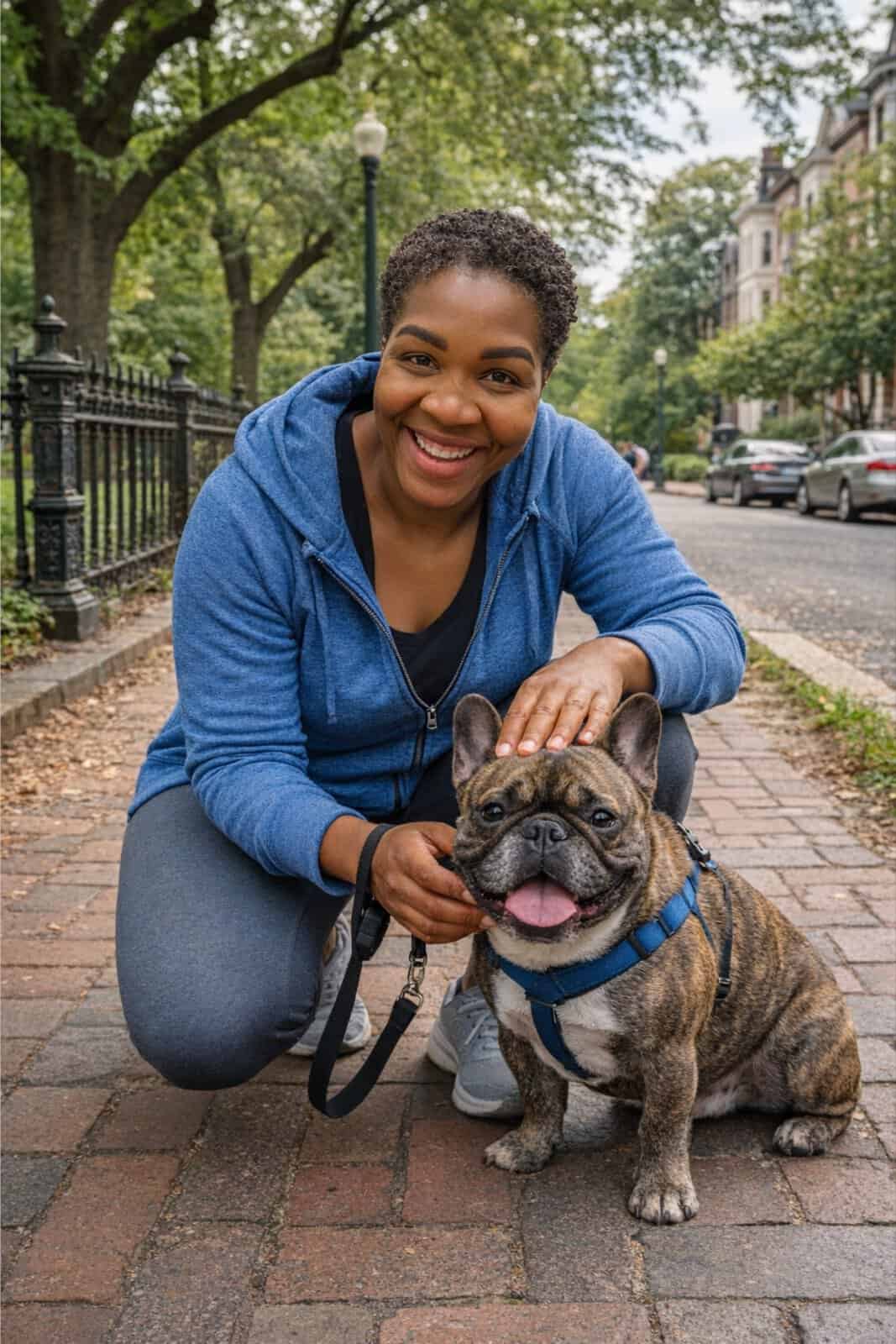
Dogs tell you how they feel long before they bark, pull, or freeze, and most of it happens in the face and body. A lip lick, a quick head turn, a tucked tail, a sudden stop to sniff a spot that isn’t interesting. Those are signals.
A trained walker sees them and adjusts in the moment. We cross the street. We pause and let your dog look. We choose a quieter block. We head home early if that’s what today calls for.
That’s the difference between a walk that helps your dog and one that just happens to them. If you’d like to learn the signals yourself, our guide on how to tell if your dog is stressed walks through the common ones.
A robot leading your dog doesn’t see any of it. It keeps going.

Can a robot handle a Capitol Hill sidewalk?
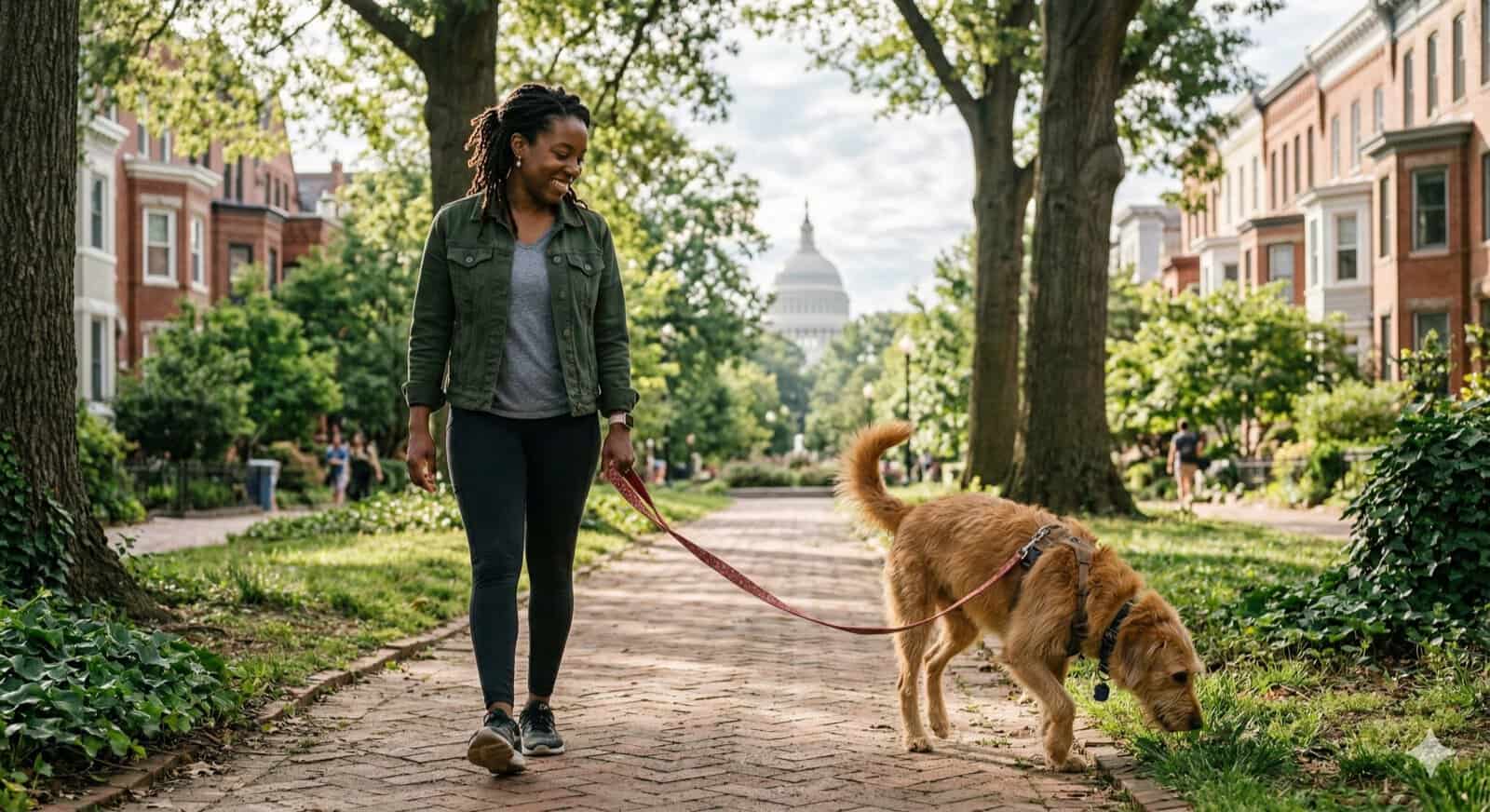
Capitol Hill is a hard place for a machine to walk a dog. Think about a normal midday block on the Hill:
- Uneven brick sidewalks lifted by tree roots
- Scooters and bikes coming from both directions
- Construction fencing that pops up overnight
- Delivery trucks double parked with the ramp down
- Other dogs, kids on the way home, a jogger who comes around the corner fast
- Squirrels. So many squirrels.
Every one of those is a decision. A person makes dozens of them on a single walk, often without your dog ever noticing. That’s the job.
Will dogs lose their connection with people?
No, not as long as people keep showing up. This was the big question under the original post, and thousands of people had an opinion.
Here’s where we land. Dogs bond through attention, not transportation. The walk is where your dog gets someone who notices them: who says their name, waits while they sniff, and gives them a minute to decide whether the corner ahead feels okay. That’s connection.
A robot can give your dog a trip outside. It can’t give your dog a relationship. And for the dog who waits at home all day for you, the midday visit is often their one real conversation until you walk back in the door.

What would a robot dog walker mean for your dog?
It depends on your dog, and that’s exactly the point. A machine treats every dog the same. Real dogs aren’t the same.
- The dog who startles at a truck backfiring would be walked straight past the noise, with no one there to read their fear or turn around.
- The older dog who slows down on the walk home would be pulled at the same pace as always.
- The smart, social dog who’d rather have a lap and a puzzle than a long walk wouldn’t get the choice at all.
A good walker builds the visit around the dog in front of them that day. That’s why we offer three walk types, enrichment, decompression, and standard, and why any visit can shift to indoor enrichment when your dog says so. You can read more on our dog walking services in Capitol Hill page.
What do I look for in a dog walker instead?
Look for a person who can tell you what they noticed, not just how far they went. A few questions to ask:
- What do you watch for when you first walk in?
- What do you do if my dog doesn’t want to walk?
- How will I know how the visit went?
- What training do you have in dog body language?
We’ve put together a longer list in the real questions to ask a dog walker on Capitol Hill.
Frequently Asked Questions About Robot Dog Walkers
Can a robot walk my dog?
A robot can lead a leashed dog along a simple route, but it can’t watch for injury, stress, or illness, and it can’t make decisions when something unexpected happens. In the San Francisco video, a person still followed the robot and the dog on the walk.
Are robot dog walkers available in Capitol Hill DC?
We’re not aware of any robot dog walking service operating in Capitol Hill DC. The San Francisco robot’s owner and maker have not been confirmed.
Is a robot dog walker safe for my dog?
Nobody has shown that it is. A robot can’t respond to a loose dog, a dropped leash, a dog who panics, or a sudden health problem the way a person trained in pet first aid can.
What does a dog walker check on every visit?
A good walker checks your dog’s greeting, movement, body language, and bathroom habits, follows your dog’s lead on what kind of walk they want, secures your home, and sends you a report afterward. Ours come with a photo and a real note after every visit.
Will robots replace dog walkers?
Robots may get better at moving along a sidewalk, but the heart of dog walking is noticing and responding to a living animal. That part takes a person who knows your dog.
Want a person who notices? Book a meet-and-greet
Every Saving Fido walk is private and one-on-one, with a trained walker who knows your dog and a photo and note after every visit. If your dog deserves someone who notices the small things, we’d love to meet them. You can come too. Book a meet-and-greet.
Every dog deserves a walk of their own.

Tracy Murray is the founder of Saving Fido Dog Walking, the only Fear Free and CBATI-KA certified private dog walker exclusively serving Capitol Hill. She is a Certified Behavior Adjustment Training Instructor, is also Pet First Aid and CPR certified, and personally trains every walker on her team before they ever clip on a leash.